Happy 50th to the (New) Aquatic Birds House!

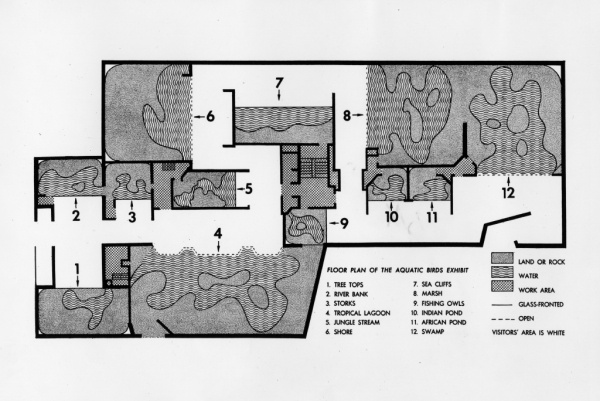
Aquatic Birds House floor plan. WCS Photo Collection

This week on Wild Things, we’re celebrating a big Bronx Zoo milestone: the fiftieth anniversary of the opening of the new Aquatic Birds House. On September 24, 1964, New York Zoological Society members flocked (sorry! had to do it!) to a preview of the new exhibit, which featured herons and spoonbills, rails and stilts, flamingos and ibises, storks and jacanas, avocets and hammerheads, stints and plovers, terns and cormorants, and other birds dependent on wetlands. Continue reading →
Trail blazing for women scientists: Gloria Hollister Anable’s papers

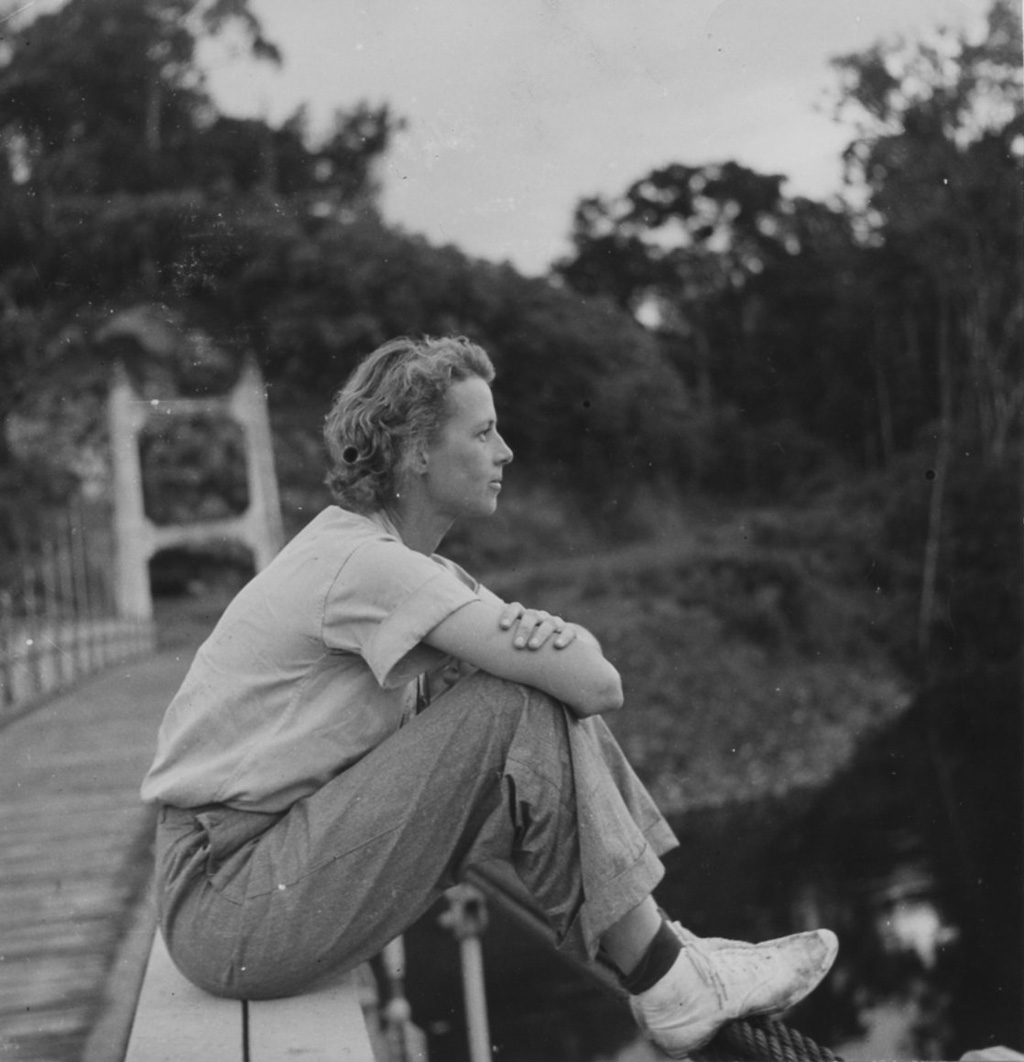
Gloria Hollister on a suspension bridge at Garraway, British Guiana, 1936. Scanned from WCS Archives Collection 1006

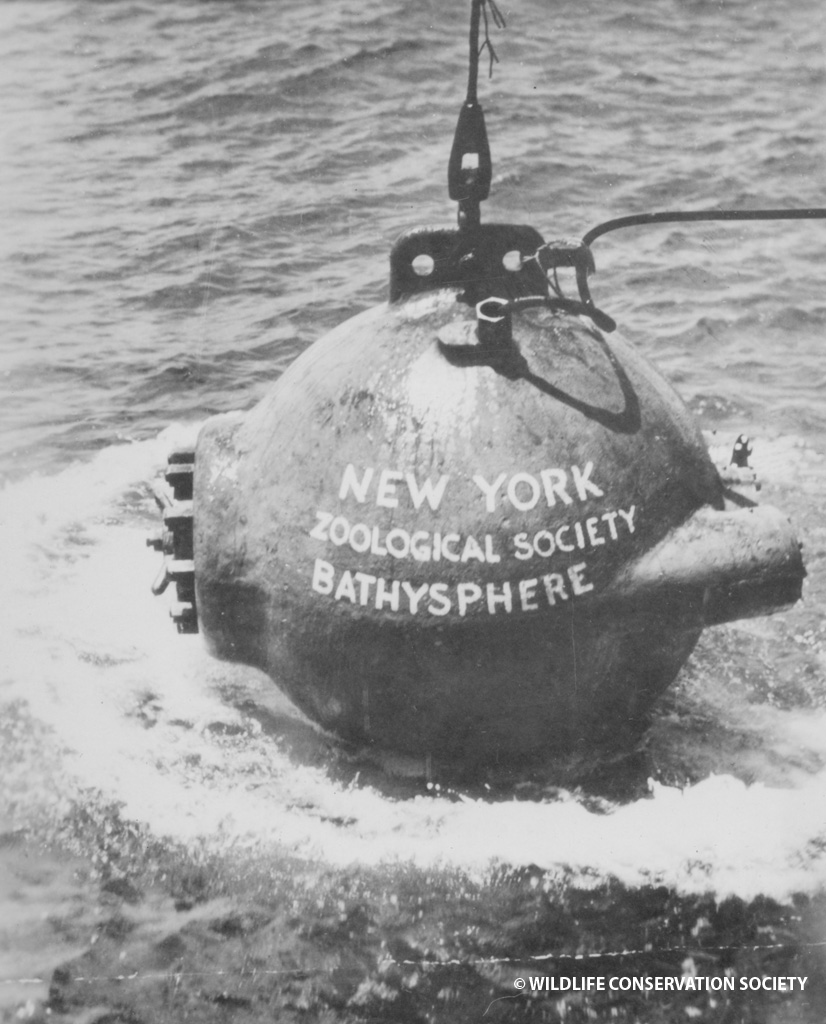
Processing the collection of Gloria Hollister Anable has been an enlightening experience not only because of her extraordinary life but also because of her obscurity. Relatively unknown outside of conservation circles, Hollister took part in several expeditions for the New York Zoological Society (NYZS), including Dr. William Beebe’s expeditions to Bermuda. During one such expedition to Nonsuch Island, Hollister descended in the Bathysphere, an underwater submersible, to a depth of 1,208 feet – at that time a record for a deep-sea dive completed by a woman. Hollister led her own expedition to British Guiana in 1936, worked in the first Red Cross blood bank during World War II, and in the 1950s was chairwoman of the Mianus River Gorge Conservation Committee. Continue reading →

1970s Whale Songs Continue to Echo Today

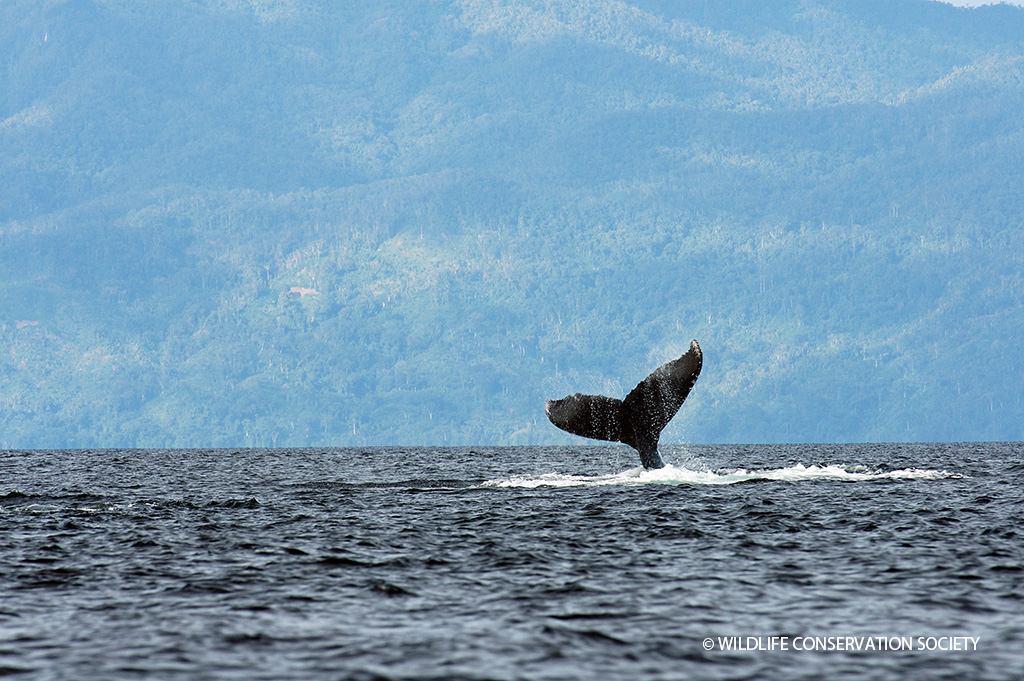
Julie Larsen Maher_0542_Humpback whale in Antongil Bay_MDG_07 15 04 Few things can compare to the thrill of seeing a whale at sea. Every year, thousands of nature enthusiasts head out to sea in search of these leviathans, which to many have become the embodiment of nature itself. What’s the attraction? Whales are gigantic and graceful animals exquisitely adapted to the marine environment, and—as we have come to learn over the past half century—behaviorally sophisticated and intelligent. As mammals that left the land more than 50 million years ago, they are distant relatives after all, alien yet somehow familiar and endearing. Continue reading →

Celebrating a Milestone in the History of Marine Studies

William Beebe peers out of the Bathysphere, 1934. WCS Photo Collection

William Beebe peers out of the Bathysphere, 1934. WCS Photo Collection

Today we celebrate the historic scientific expeditions that William Beebe undertook in the Bathysphere–including his record-setting dive to the deepest depths ever ventured by a human on August 15, 1934. To read the rest of this post, check out the WCS Photo blog, Wild View.

And come visit the Bathysphere and see some of the Department of Tropical Research artwork this summer at the New York Aquarium! The exhibition Drawn from the Depths, curated by Katherine McLeod, opens today, and the Aquarium is hosting a special NYA@Night tonight.  For more information and tickets, visit NYA@Night.

Diving into the Past: Discovering the Department of Tropical Research through Digitization

1005-20-01-0016-blog.jpg Spending months working with historical photos from a specific collection almost creates an illusion that one may have participated in the scenes depicted in these prints.  This notion particularly holds strong when carefully scanning and assigning appropriate metadata to historical photos from scientific research expeditions in beautiful locales filled with wondrous wildlife. Having the privilege to spend my photo archives internship working with many prints from the famous Bathysphere dives conducted by William Beebe and Otis Barton provided me with an imaginary tropical escape while also teaching me invaluable metadata skills. Continue reading →

Shaping Wildlife: Animal Art in the Early Days of the Bronx Zoo (Part 2)

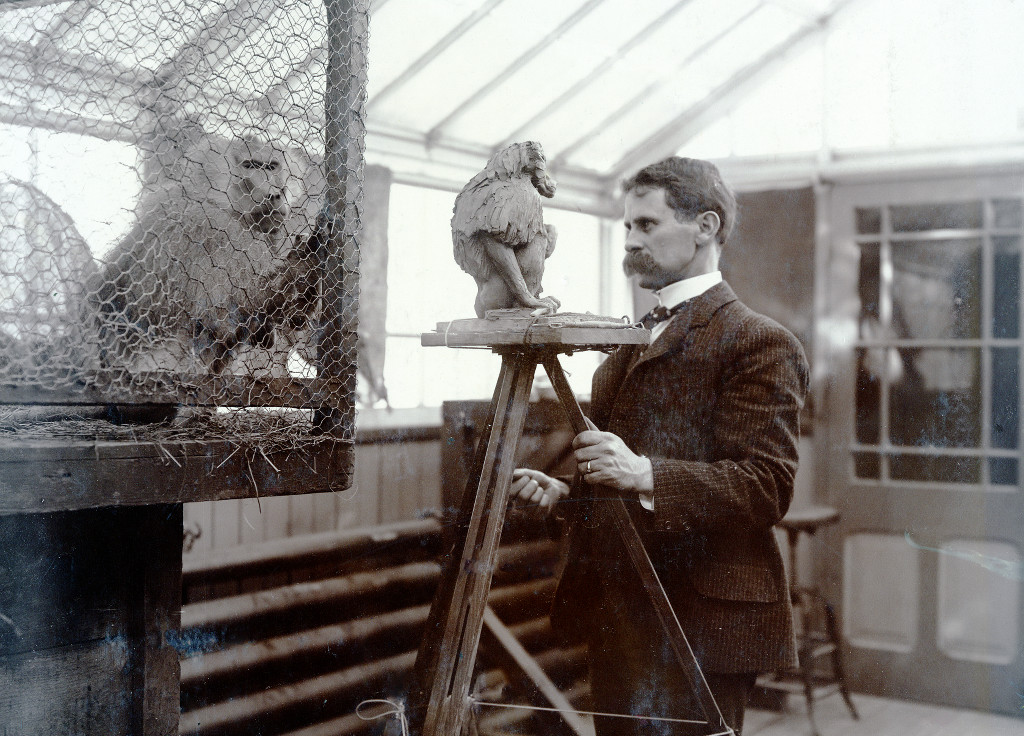
Wildlife Conservation Society_476_Proctor sculpting baboon_BZ_00 00 00_cropThis is the second part of a two-part blog post on art in the early days of the Bronx Zoo. See here for part 1.

Beyond the Bronx Zoo’s Lion House studio, New York Zoological Society officials attempted to oblige artists working at the Zoo. Director William T. Hornaday arranged a special reduced rate for artists at the nearby Parkway Hotel. “The place seems respectable,” he assured visiting artists, “although of course there is a bar-room attachment”—a feature that possibly bothered the teetotaling Hornaday more than his artist guests. Hornaday also sent out a general order to all employees that “artists, sculptors, zoologists and students generally” were to be given special attention and “whenever possible, seats should be offered.”   Continue reading →

Shaping Wildlife: Animal Art in the Early Days of the Bronx Zoo (Part 1)

2016pc069“Intrepid are the artists who dare the wrath of wild beasts in the New York Zoological Park.”

So proclaimed a 1906 New York Tribune feature on the artists who studied their subjects at the New York Zoological Park, or Bronx Zoo, as it became more commonly known. To be sure, any work involving wild animals can be dangerous. Yet while Bronx Zoo officials could never guarantee the behavior of the animals in their charge, they set a new precedent for accommodating and encouraging artists working at the Zoo.  Continue reading →

Fighting (and Fanaticism) for Fur Seals

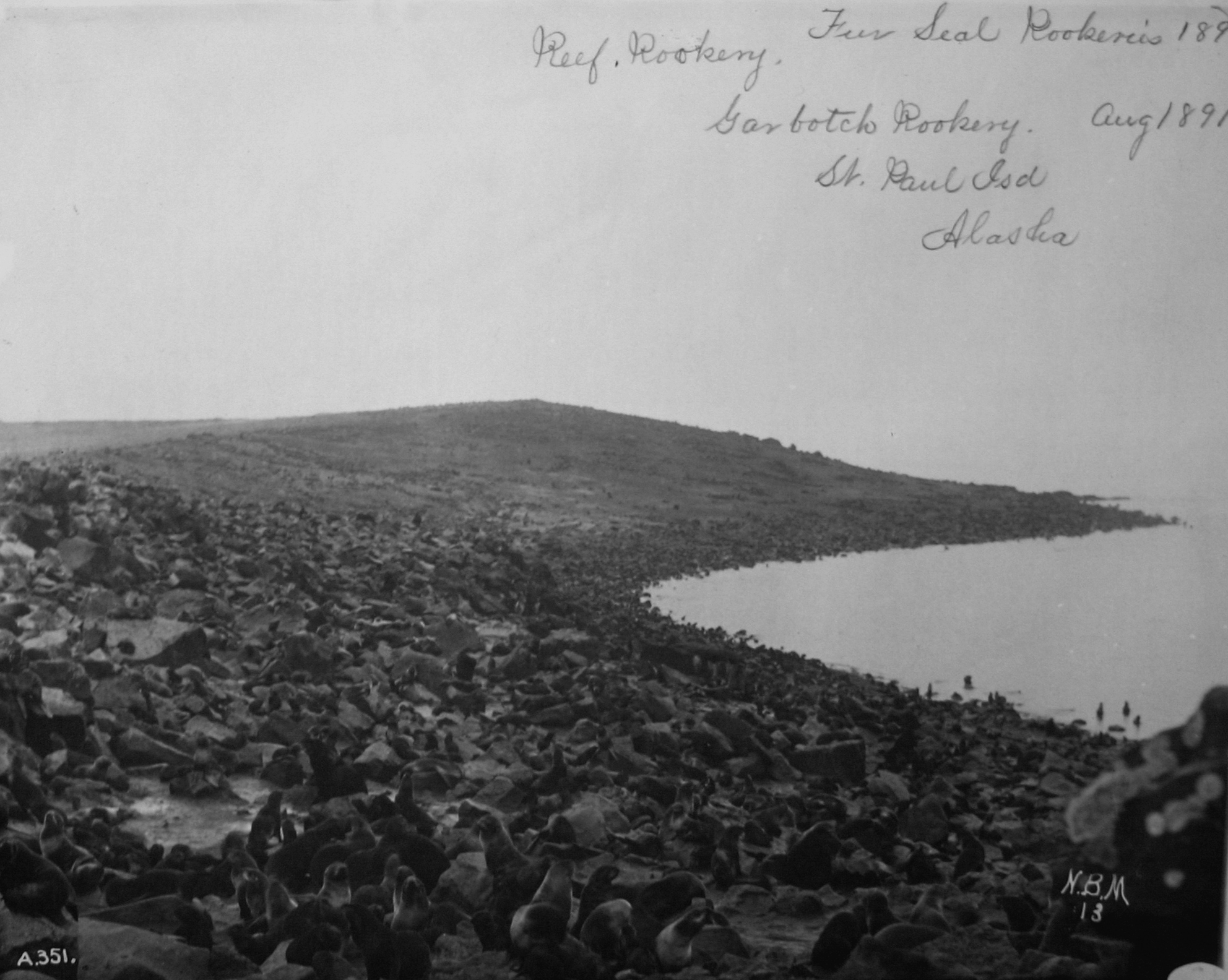
fish7848 Henry W. Elliott, William T. Hornaday, and John Hay spent nearly a decade attempting to save the staggering decimation of the Alaskan fur seals from their mating grounds on the Pribilof Islands. The islands were first discovered by Europeans in 1786 and soon after became part of the Russian Territories. In 1867, they became property of the United States and were later leased to the Alaska Commercial Company, who held the monopoly on seal hunting and pelt trading. The islands were highly sought by hunters for their fur seal rookeries, large areas where thousands of seals gathered to mate, raise their young, and fish.  Continue reading →

Working in the Wild

4041-1976-Bryceson-Conway-thumbnail.jpgIn the 1970s, the New York Zoological Society [NYZS] increased its efforts in international conservation, sponsoring external researchers and conservationists with projects that furthered the NYZS mission of protecting wildlife and wild places.  NYZS-sponsored researchers conducted field work in countries far from home, often for several months at a time.  Reporting back to the Society, they shared exciting scientific findings or provided updates on conservation efforts in regions including East Africa, Central America, and Southeast Asia.  But amid the progress reports and publications full of data from the field, the correspondence from field researchers gives a sense of the physical and logistical difficulties of conducting international research.  Continue reading →

This entry was posted in Uncategorized by .