
For several months, WCS Archives Technician Gianna Brassil has been diligently creating a detailed inventory of the physical architectural drawings from a century of building and design at the Bronx Zoo. The project was made possible by a Conservation/Preservation Discretionary Grant from the New York State Library. The drawings are key to understanding more about our built environment and our history. To that end, Gianna presents the first of two posts related to those themes.
In this blog post, I will explore the roots of the City Beautiful Movement and the social, political, and economic forces that led to its emergence as the most influential urban planning movement in late 19th century and early 20th century America. Known at the time of its creation as Baird Court, the Bronx Zoo’s Astor Court is one of the few remaining intact examples of the City Beautiful Movement in New York City, and it is an important site through which we can analyze the relationship between the rapidly changing city and its built environment.
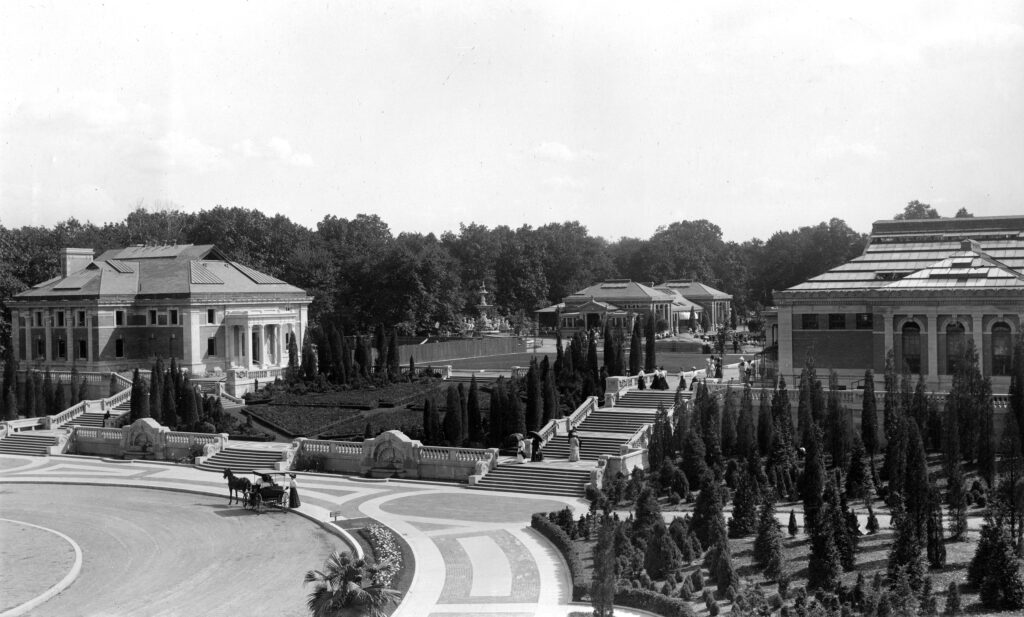
The City Beautiful Movement was an urban planning movement that flourished between the 1890s and the 1920s. The movement first came to prominence in 1893 with the World’s Columbian Exposition in Chicago, headed by Daniel H. Burham. Burham and other advocates of the City Beautiful Movement argued that urban planning and design could not be separated from social issues and that it should promote “civic virtue” and the “waning of social ills.” This call for civic virtue can be read in response to the sharp increase in immigration from southern and eastern Europe, overcrowded tenement housing, and the chaotic approach to sanitation, pollution, and traffic affecting most major American cities at the time.
The City Beautiful movement was funded primarily through the patronage of the upper-middle class, who were concerned with the influx of immigrants and what they considered to be immigrants’ effect in generating the “unsightly conditions” of American cities. The growing nativist sentiment from the upper-middle class milieu in the United States also likely contributed to a desire to establish visible ties to European classical traditions through the Beaux-Arts aesthetic.
The New York Zoological Society’s early officials took pride in placing the zoo among other recently opened New York City institutions—such as the Metropolitan Museum of Art, the New York Public Library, and the American Museum of Natural History—as a site for “public betterment,” a common Progressive Era refrain. Influenced by the City Beautiful Movement, architects George Lewis Heins and Christopher Grant LaFarge and landscape architect Harold A. Caparn employed neoclassical designs at Baird Court—renamed Astor Court in 1989 in honor of long-time trustee Brooke Astor—that signaled to visitors the Bronx Zoo’s status as a site of refinement and learning. Astor Court is a prime example of the neo-classical style of the City Beautiful movement in late nineteenth-century architecture. It is one of the few surviving intact examples of the influential urban planning movement in New York City, and the only one in the Bronx. Honoring this unique piece of architectural history, Astor Court was designated as a New York City landmark in 2000.
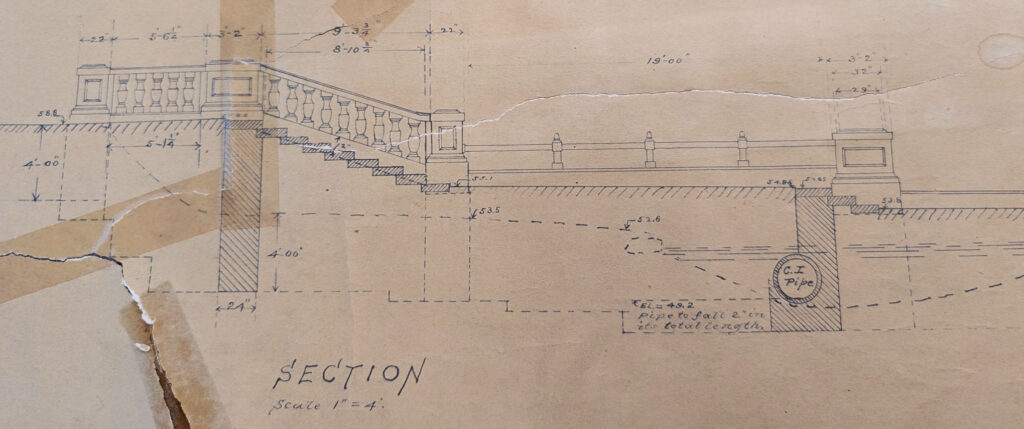
The story of the City Beautiful Movement is an example of how architecture and urban planning movements are inseparable from the class dynamics at play in late-19th and early-20th-century New York City. Rather than changing the system that was largely responsible for the atrocious living conditions of the city’s poor and new immigrants, advocates of the City Beautiful Movement hoped that the construction of public beautification projects would create a “harmonious social order.” The City Beautiful Movement has been critiqued by figures such as urbanologist Jane Jacobs, who went so far as to refer to the movement as an “architectural design cult,” critiquing the way in which the movement aimed for grandeur at the expense of urban planning designed with the needs of community members in mind.
What do you think of the City Beautiful Movement and its manifestation at the Bronx Zoo at Astor Court?