
This post is by Sabrina Moore, WCS Archives Technician (October 2025-February 2026). Sabrina worked with the WCS Archives as part of our Department of Tropical Research Glass Negatives Digitization project, funded by the Metropolitan New York Library Council (METRO). By May 2026, the WCS Archives looks forward to sharing the results of this project and more of the images that Sabrina discusses below.
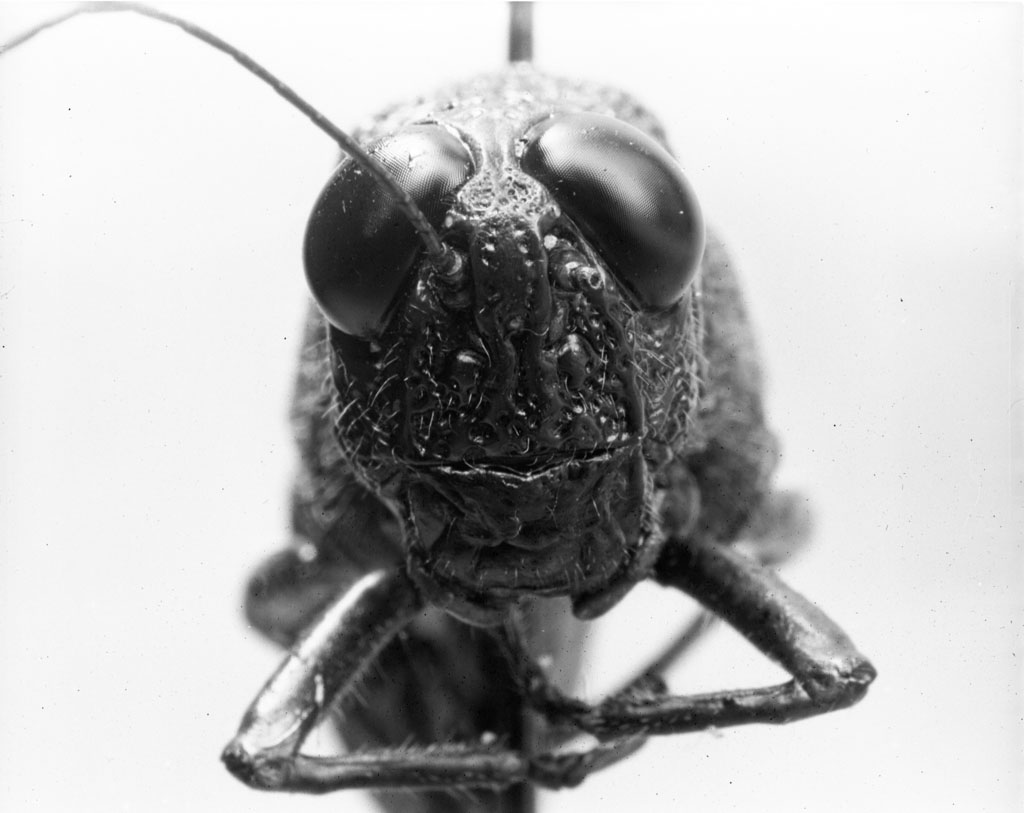
Insects and arachnids make up just 16% of the Department of Tropical Research’s photographic glass negatives that I scanned during the DTR Glass Negatives Digitization Project, yet in William Beebe’s vision of the rainforest, they dominate entire worlds. As I worked through the 1,000 negatives—cleaning, rehousing, digitizing, and creating metadata—the details of these small creatures came into sharp focus. They were not merely background to birds and mammals; in Beebe’s writings, ants emerge as architects and warriors in the jungle.
This blog post highlights the 163 images depicting insects and arachnids and offers a gentle warning for those who are averse to insects. Beebe and the DTR team brought themselves close to these creatures, revealing both the meticulous beauty of their forms and the sometimes- unsettling realities of their behaviors.
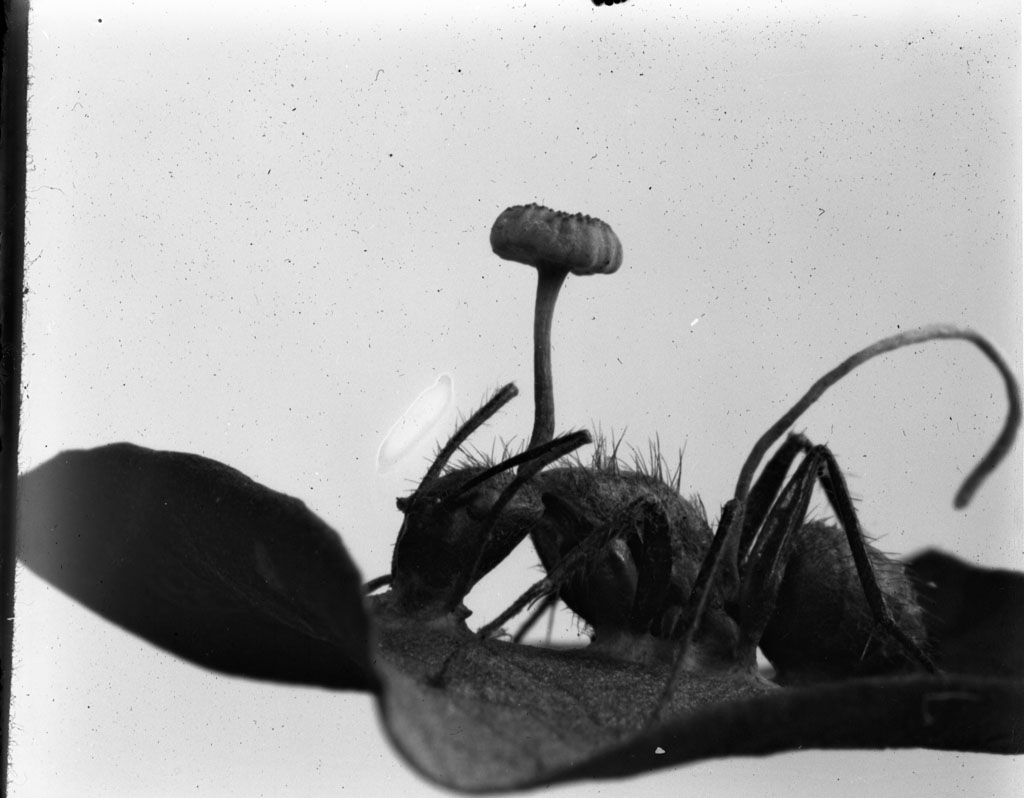
Beebe was not alone in this interest. His colleague Alfred E. Emerson, later a leading termite specialist, was part of the same research team (and photographer for termite-focused images in the collection). Their combined work helped establish early American entomology and contributed to the scientific and casual understanding of insect societies.
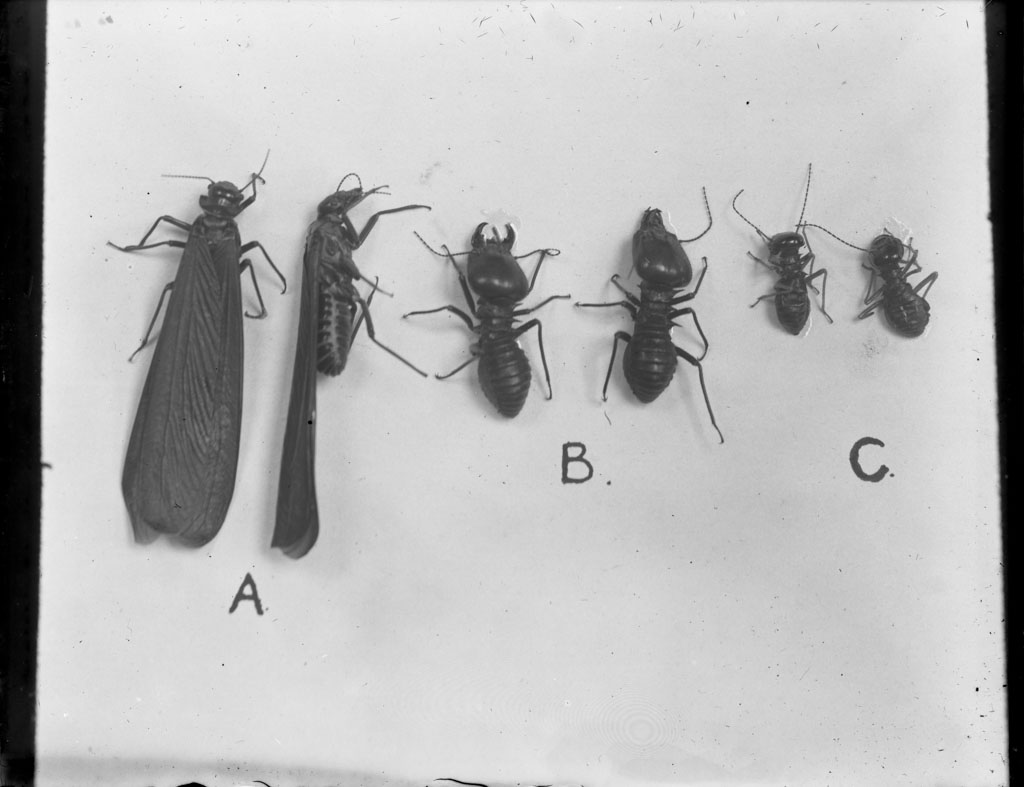
Between 1916 and 1924, William Beebe lived and worked in British Guiana (now Guyana), stationed at the Kalacoon and Kartabo Laboratories. One of his primary goals was to study the hoatzin, a bird he believed could illustrate an example of evolutionary history.
As Curator of Ornithology at the New York Zoological Society, he hoped to bring the species back to the Bronx Zoo for public display. Despite years of effort, every attempt to transport the hoatzin failed. Yet Beebe did not abandon the expedition. Instead, he widened his focus to include the creatures that filled the forest floor, tree trunks, and riverbanks—insects.
One of the most striking observations appears in Jungle Peace, where Beebe recounts the events in Pit Number 5, a deep pit used to trap animals for study. There, a colony of army ants overwhelmed the pit’s inhabitants—other insects, even frogs and toads—attacking with relentless coordination. Beebe likens them to “Huns of the jungle,” moving with “marvelous singleness of purpose and manifold effectiveness” (211, 217).
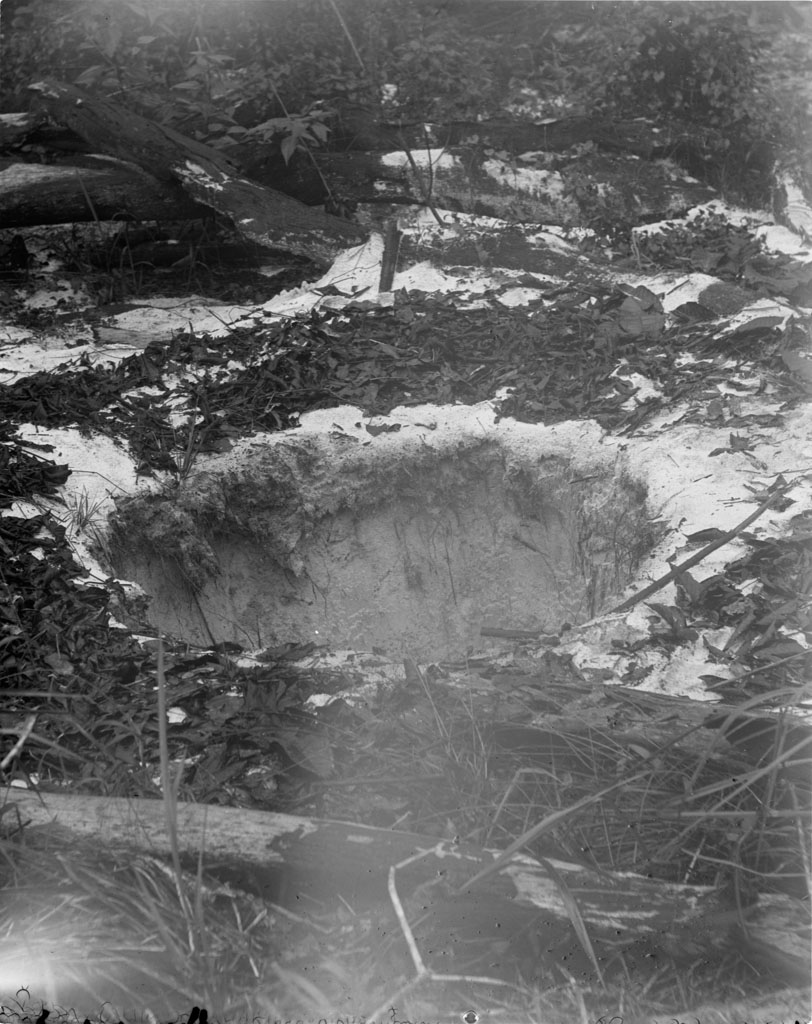
His prose is almost cinematic: he calls the event a “massacre,” with few survivors (Jungle Peace, 215). The ants’ behavior—disciplined and strategic—can be read as a miniature reflection of human warfare. This imagery may not have been accidental, as Beebe had volunteered for military service during the First World War. Though he rarely wrote about the conflict directly, its shadow appears in the metaphors he uses to describe nature’s relentless battles.
Beebe’s fascination with these colonies extended beyond this single episode. He also documented an ant mill, a rare phenomenon in which army ants lose their pheromone trail and begin marching in a continuous circle—sometimes until they collapse. He describes the mill as an “insane circle” that had turned the “masters of the jungle [into] their own prey” (Edge of the Jungle, 293).
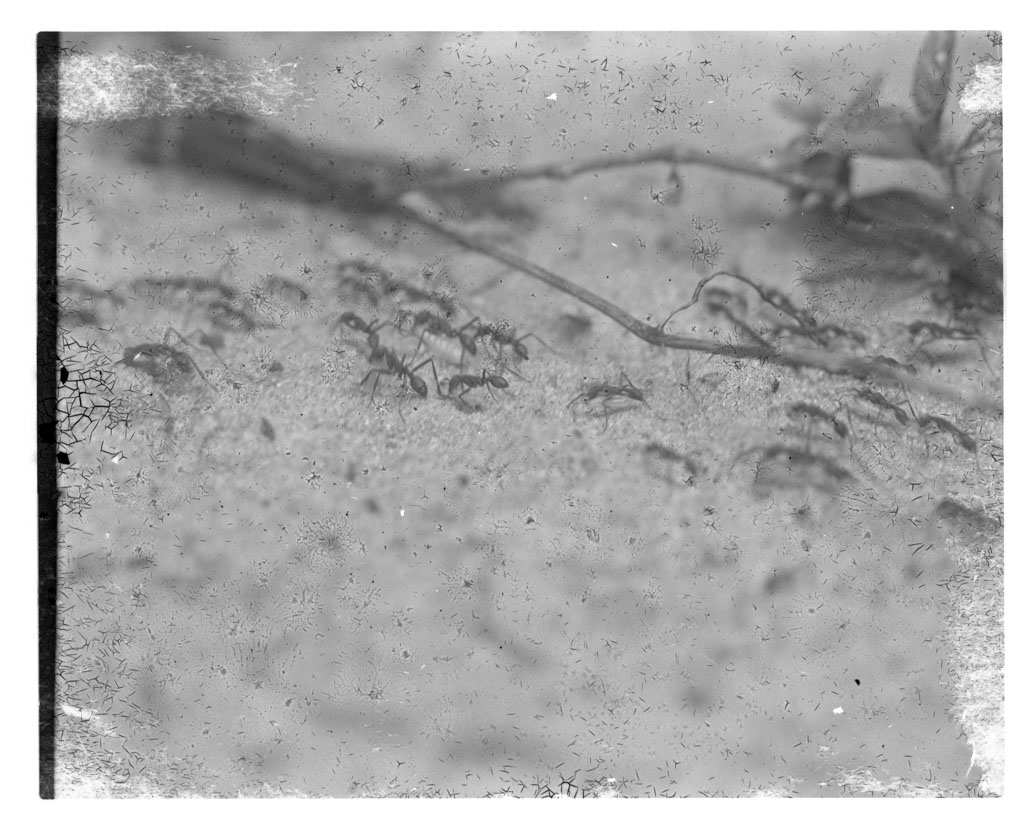
For users today, the newly digitized photographs within the DTR Glass Slides collection allow close observation of these often-overlooked creatures. While Beebe came to British Guiana to study the hoatzin, his work expanded to reveal the bustling worlds of the forest floor, reminding us that the rainforest is more than just its dazzling, exotic creatures. In fact, it is its tiniest inhabitants that can shape the structure of this complex ecosystem.