With this inaugural post, we plan to issue digital versions of newly curated exhibits that are displayed in a case within the offices of the Wildlife Conservation Society. Each exhibit will share a subject from WCS’ amazing history with the use of images and documents from the WCS Archives.
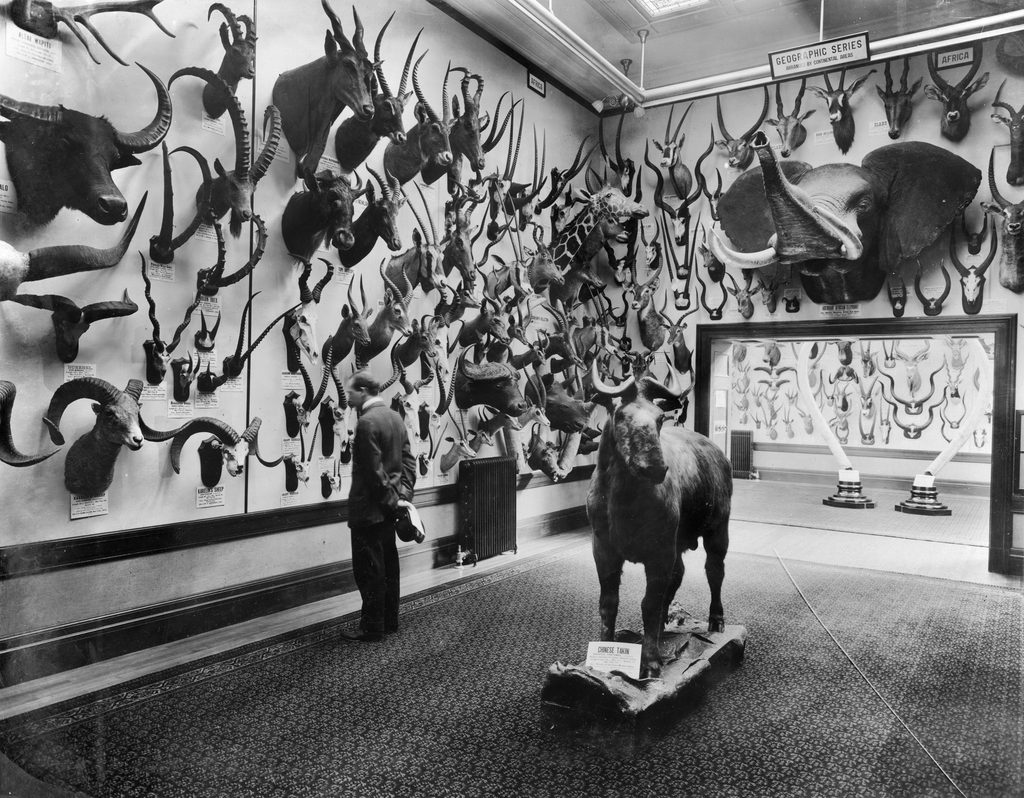
In November 1908, activity was underway across the Bronx Zoo’s Astor Court, then known as Baird Court. As workers finished the yards and pathways around the newly opened Elephant House, crews in the northeast corner of the court broke ground for a new Administration Building. The building included the office of the zoo’s first director, William Hornaday, a library, reading room, reception room, and boardroom, along with galleries displaying animal specimens—known as the National Collection of Heads and Horns—and artwork featuring wildlife.
Like the other buildings on Baird Court, architects Heins & LaFarge were responsible for the design.The Administration Building’s opening on November 9, 1909, was part of celebrations for the zoo’s “Decennial,” or tenth anniversary.At the November opening, special guests viewed the National Collection of Heads and Horns, curated by the zoo’s Director William T. Hornaday. The collection was a featured attraction at events in the months that followed.
The Administration Building grew to accommodate zoo business slowly over much of 1910. During that period the New York Zoological Society’s Executive Committee established a Library Fund and Library Committee, hired temporary library catalogers, and hosted the NYZS Ladies’ Auxiliary for their monthly meetings.
On November 20, 1910, the Administration Building had a second opening for the public. From the next day on, only NYZS members and their families with special tickets could visit the building. The following photos were taken by staff photographer Elwin R. Sanborn for a feature in the January 1911 issue of the members’ magazine New York Zoological Society Bulletin.
From 1913 onward, in anticipation of establishing the Heads and Horns Museum building at the Bronx Zoo, animal artwork usually filled the skylit gallery space upstairs at the Administration Building. The paintings of Carl Rungius and others graced the walls.
Art Gallery, 1935.Director William Hornaday reads in his office. The names printed high on the walls were Hornaday’s tribute to “Champions of Wildlife,” many of whom had books in the library of the Administration Building.
For several months, WCS Archives Technician Gianna Brassil has been diligently creating a detailed inventory of the physical architectural drawings from a century of building and design at the Bronx Zoo. The project was made possible by aConservation/Preservation Discretionary Grant from the New York State Library. The drawings are key to understanding more about our built environment and our history. To that end, Gianna presents the second of two posts related to those themes.
Who were the people who built some of the iconic buildings of the Bronx Zoo? In this blog post, I will explore the legacies of three architects whose work significantly shaped the early built environment at the Bronx Zoo and in New York City at large: George Lewis Heins, Christopher Grant LaFarge, and Aymar Embury II.
Heins & LaFarge
George Lewis Heins (1860-1907) and Christopher Grant LaFarge (1862-1938) met while studying at Massachusetts Institute of Technology. In 1888, the two won a design competition for the Cathedral of St. John the Divine, an extremely prestigious project for the late twenty-somethings. Their design for the cathedral was eclectic, incorporating many Byzantine-Romanesque elements. The cathedral’s domed ceiling was built by the Guastavino Fireproof Construction Company, which was founded by the renowned Spanish architect Rafael Guastavino Sr. and his son, Rafael Guastavino Jr. The Guastavinos innovated a unique, self-supporting vaulted ceiling system that used gravity to lock the tiles in place. The partnership between Heins and LaFarge and the Guastavino family first took root during the Cathedral of St. John the Divine project and continued for decades to come while both firms were active.
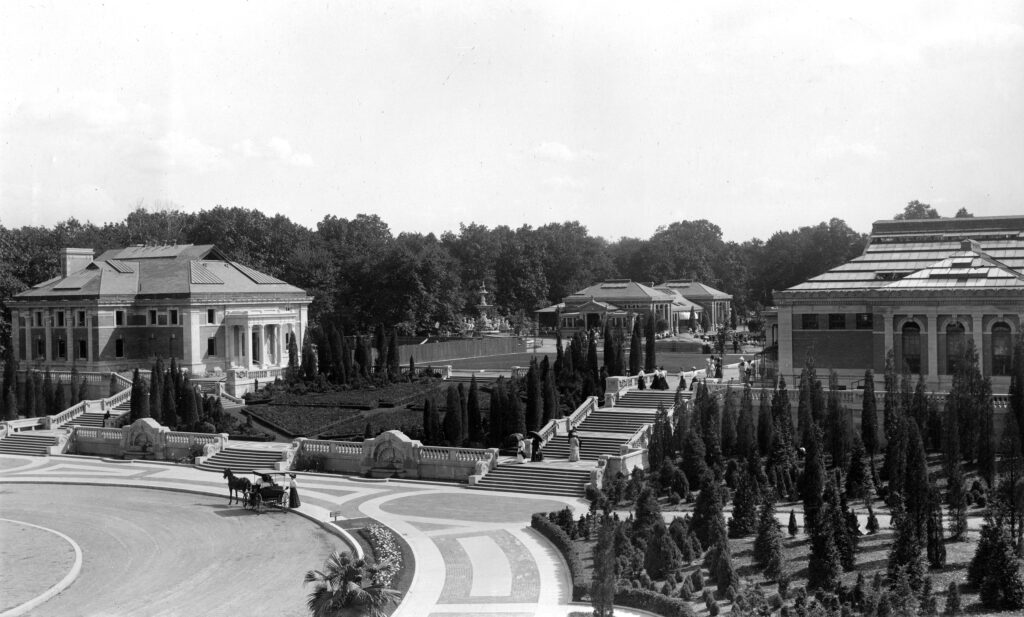
In 1899, Heins was appointed New York State Architect by Governor Theodore Roosevelt, who himself was a foundational figure in the establishment of the Bronx Zoo. Roosevelt commissioned Heins & LaFarge to design the buildings along Astor Court, known at the time as Baird Court. The design included a series of pavilions and six brick and limestone buildings in the Roman Ionic and Doric style, adorned with animals on their friezes. One of the most iconic–and the tallest– buildings on Astor Court is the Elephant House (present day Zoo Center). Heins & LaFarge designed the Elephant House based on the Hippo Palace at the Antwerp Zoo, and the stunning interior tilework was done by none other than the Guastavino Fireproof Construction Company.
Photograph of the interior of the Elephant House featuring interior tilework by Guastavino, December 1908.
Drawing of Hot Water Heating in the Elephant House, circa 1906.
In 1901, Heins & LaFarge began designing subway stations and buildings for the Interborough Rapid Transit Company, the first subway system in New York. Their showpiece City Hall station opened in 1904, adorned with sweeping Guastavino-tiled arches and skylights. A few examples of Heins & LaFarge subway designs are still standing, including the above ground Dutch renaissance style control house at Bowling Green and the West 72nd and Broadway subway entrance.
Aymar Embury II
New York City-born Aymar Embury II (1880-1966) is best known for his work on commissions from the City of New York between the 1930s through the 1950s. He was a frequent collaborator of Robert Moses, with whom he worked as an architect and supervisor of a design and construction team that executed more than six hundred projects for the city of New York, including the Triborough Bridge, the Lincoln Tunnel, the Henry Hudson Memorial Bridge, the Whitestone Bridge, the Rainbow Bridge, the Jamaica Bay Bridge and The Port of New York Authority Terminal Building.
Great Apes House in topographical survey of the Bronx Zoo, circa 1950.
Drawing of the Primate House Elevations and Sections, circa 1945.
Embury was the associate architect for the Great Apes House at the Bronx Zoo. Opened in 1950, the Great Apes House was the first major exhibit building to be opened in the Zoological Park since the Zebra House was completed in 1914. The cost of the building was split in half between the New York Zoological Society and Robert Moses’ Parks Department, totaling $386,000, the equivalent to about 5.3 million dollars today. Embury began designs for the Great Apes House in 1941, but due to disruptions caused by the Second World War, construction for the building did not start until 1949. In addition to the Great Apes House, Embury was an associate architect for a number of other Bronx Zoo projects such as the Penguin House, Crotona Toll House, Animal Rides, the Picnic Pavilion, an infrastructural project related to a bridge over the Bronx River, and more. Embury’s collaboration with the New York Zoological Society also extended to the New York Aquarium at Coney Island, where he was a consulting architect.
Exterior view of the Great Apes House, circa 1950. The Great Apes House was demolished in 1999 after the opening of the Congo Gorilla Forest exhibit.
Heins, LaFarge, and Embury II each left their imprint not only on the Bronx Zoo, but on the city of New York itself. After all, the history of the Bronx Zoo is inseparable from the history of New York.
For several months, WCS Archives Technician Gianna Brassil has been diligently creating a detailed inventory of the physical architectural drawings from a century of building and design at the Bronx Zoo. The project was made possible by a Conservation/Preservation Discretionary Grant from the New York State Library. The drawings are key to understanding more about our built environment and our history. To that end, Gianna presents the first of two posts related to those themes.
In this blog post, I will explore the roots of the City Beautiful Movement and the social, political, and economic forces that led to its emergence as the most influential urban planning movement in late 19th century and early 20th century America. Known at the time of its creation as Baird Court, the Bronx Zoo’s Astor Court is one of the few remaining intact examples of the City Beautiful Movement in New York City, and it is an important site through which we can analyze the relationship between the rapidly changing city and its built environment.
View of Baird Court (Astor Court), circa 1909
The City Beautiful Movement was an urban planning movement that flourished between the 1890s and the 1920s. The movement first came to prominence in 1893 with the World’s Columbian Exposition in Chicago, headed by Daniel H. Burham. Burham and other advocates of the City Beautiful Movement argued that urban planning and design could not be separated from social issues and that it should promote “civic virtue” and the “waning of social ills.” This call for civic virtue can be read in response to the sharp increase in immigration from southern and eastern Europe, overcrowded tenement housing, and the chaotic approach to sanitation, pollution, and traffic affecting most major American cities at the time.
The City Beautiful movement was funded primarily through the patronage of the upper-middle class, who were concerned with the influx of immigrants and what they considered to be immigrants’ effect in generating the “unsightly conditions” of American cities. The growing nativist sentiment from the upper-middle class milieu in the United States also likely contributed to a desire to establish visible ties to European classical traditions through the Beaux-Arts aesthetic.
The New York Zoological Society’s early officials took pride in placing the zoo among other recently opened New York City institutions—such as the Metropolitan Museum of Art, the New York Public Library, and the American Museum of Natural History—as a site for “public betterment,” a common Progressive Era refrain. Influenced by the City Beautiful Movement, architects George Lewis Heins and Christopher Grant LaFarge and landscape architect Harold A. Caparn employed neoclassical designs at Baird Court—renamed Astor Court in 1989 in honor of long-time trustee Brooke Astor—that signaled to visitors the Bronx Zoo’s status as a site of refinement and learning. Astor Court is a prime example of the neo-classical style of the City Beautiful movement in late nineteenth-century architecture. It is one of the few surviving intact examples of the influential urban planning movement in New York City, and the only one in the Bronx. Honoring this unique piece of architectural history, Astor Court was designated as a New York City landmark in 2000.
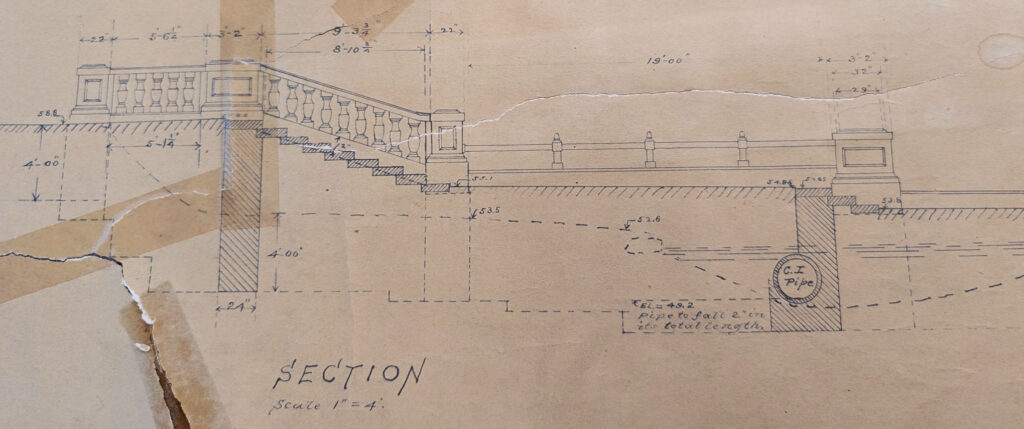
Drawing of sections and details of the west approach to Baird Court, circa 1905.
The story of the City Beautiful Movement is an example of how architecture and urban planning movements are inseparable from the class dynamics at play in late-19th and early-20th-century New York City. Rather than changing the system that was largely responsible for the atrocious living conditions of the city’s poor and new immigrants, advocates of the City Beautiful Movement hoped that the construction of public beautification projects would create a “harmonious social order.” The City Beautiful Movement has been critiqued by figures such as urbanologist Jane Jacobs, who went so far as to refer to the movement as an “architectural design cult,” critiquing the way in which the movement aimed for grandeur at the expense of urban planning designed with the needs of community members in mind.
What do you think of the City Beautiful Movement and its manifestation at the Bronx Zoo at Astor Court?
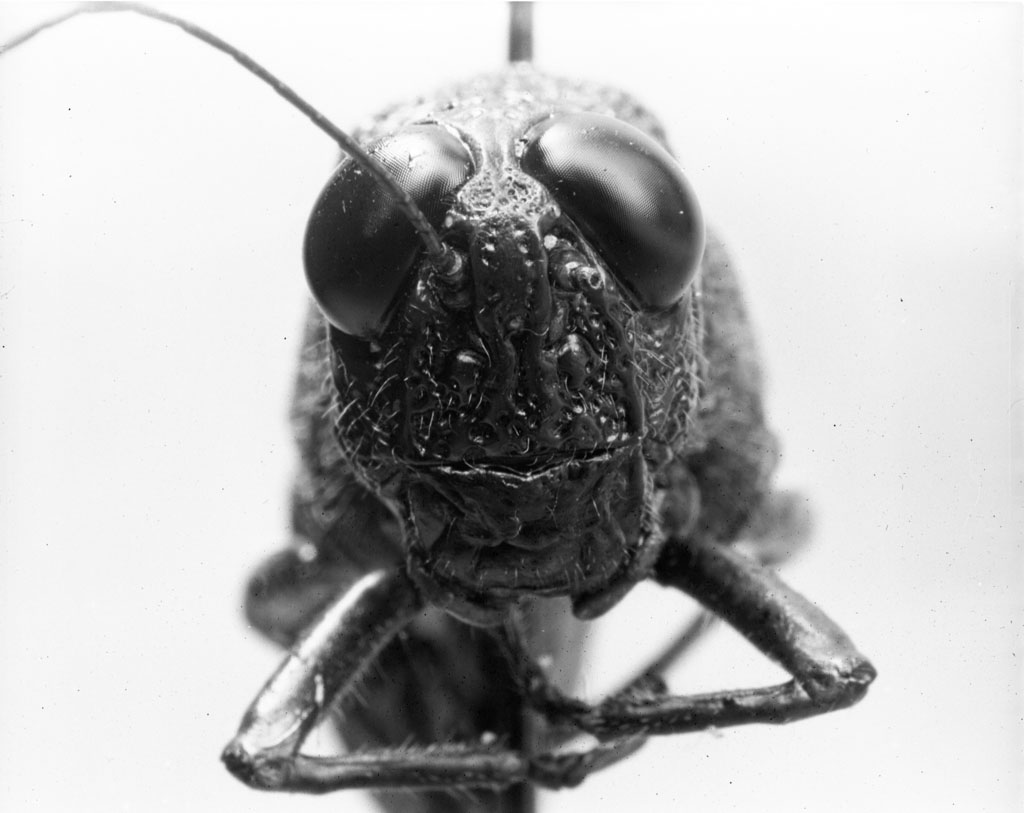
“Head of grasshopper,” Kartabo, British Guiana, 1924. WCS Archives Collection 5014-01-2665g.
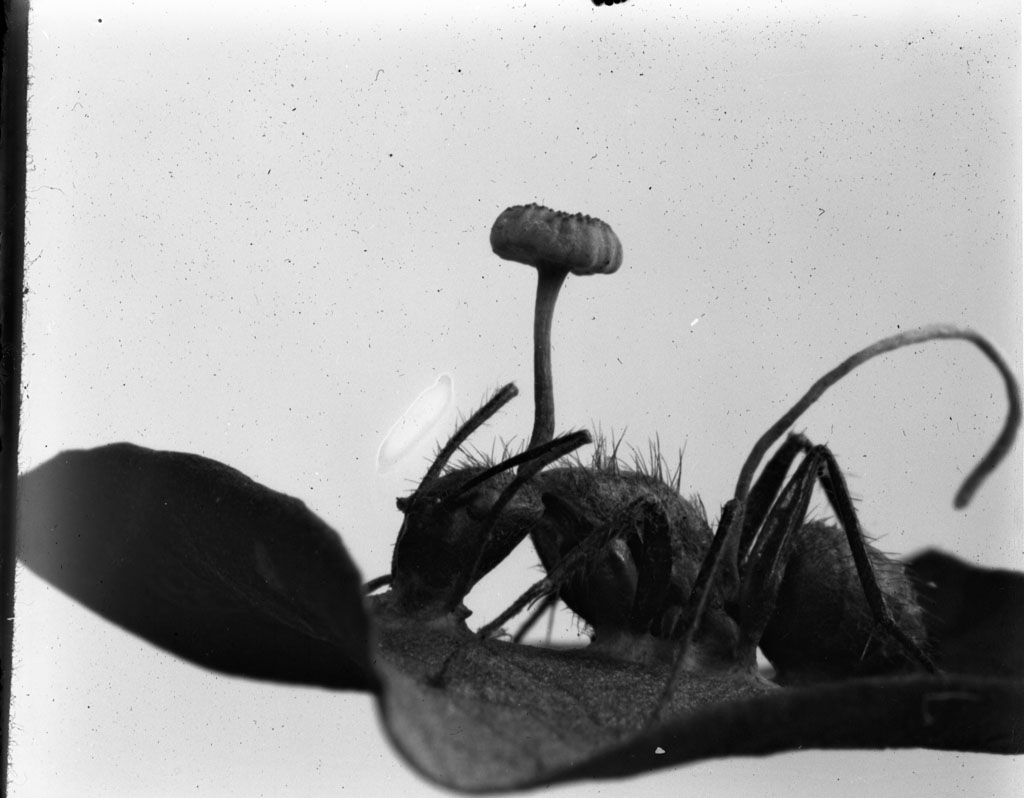
Insects and arachnids make up just 16% of the Department of Tropical Research’s photographic glass negatives that I scanned during the DTR Glass Negatives Digitization Project, yet in William Beebe’s vision of the rainforest, they dominate entire worlds. As I worked through the 1,000 negatives—cleaning, rehousing, digitizing, and creating metadata—the details of these small creatures came into sharp focus. They were not merely background to birds and mammals; in Beebe’s writings, ants emerge as architects and warriors in the jungle.
This blog post highlights the 163 images depicting insects and arachnids and offers a gentle warning for those who are averse to insects. Beebe and the DTR team brought themselves close to these creatures, revealing both the meticulous beauty of their forms and the sometimes- unsettling realities of their behaviors.
“Fungus growth on ant,” Kartabo, British Guiana, 1924. WCS Archives Collection 5014-01-2657g.
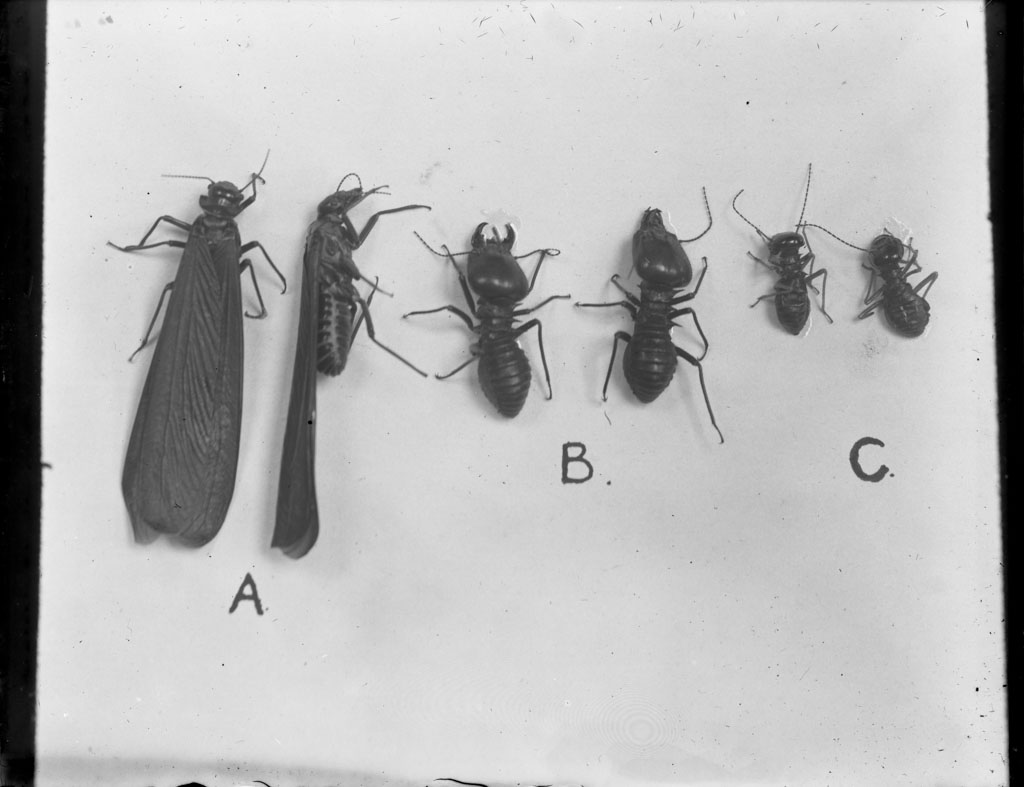
Beebe was not alone in this interest. His colleague Alfred E. Emerson, later a leading termite specialist, was part of the same research team (and photographer for termite-focused images in the collection). Their combined work helped establish early American entomology and contributed to the scientific and casual understanding of insect societies.
“Termites castes of Syntermes dirus,” British Guiana, 1919. WCS Archives Collection 5014-01-0794g.
Between 1916 and 1924, William Beebe lived and worked in British Guiana (now Guyana), stationed at the Kalacoon and Kartabo Laboratories. One of his primary goals was to study the hoatzin, a bird he believed could illustrate an example of evolutionary history.
As Curator of Ornithology at the New York Zoological Society, he hoped to bring the species back to the Bronx Zoo for public display. Despite years of effort, every attempt to transport the hoatzin failed. Yet Beebe did not abandon the expedition. Instead, he widened his focus to include the creatures that filled the forest floor, tree trunks, and riverbanks—insects.
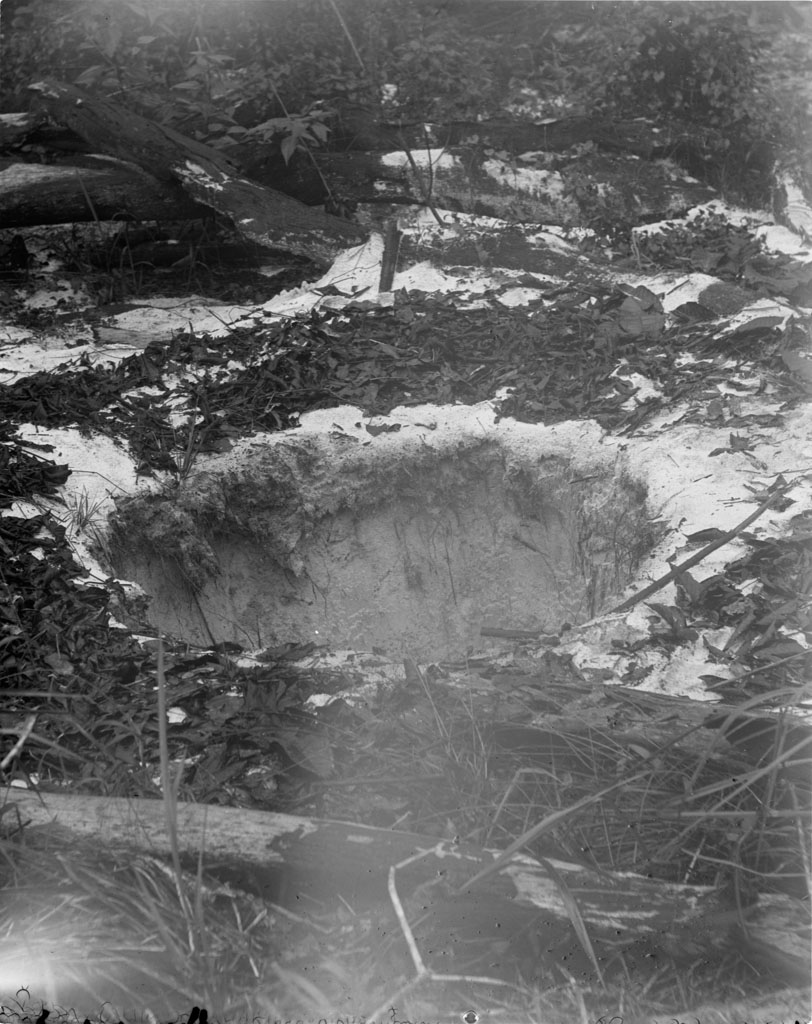
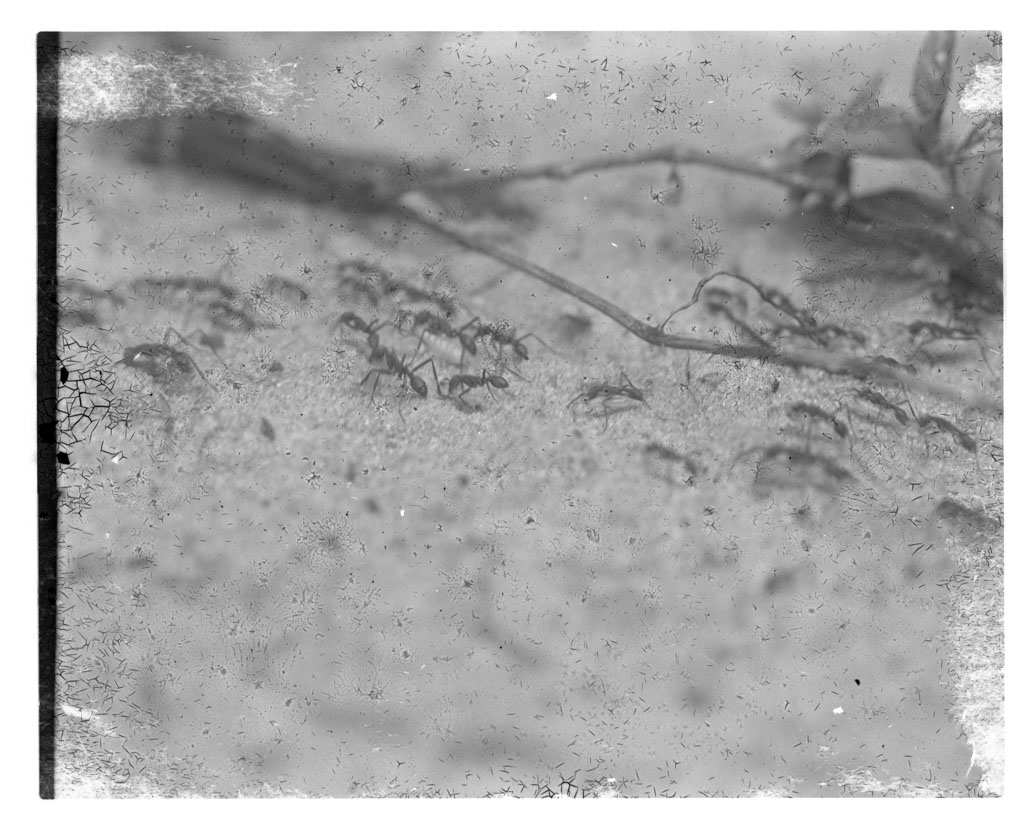
One of the most striking observations appears in Jungle Peace, where Beebe recounts the events in Pit Number 5, a deep pit used to trap animals for study. There, a colony of army ants overwhelmed the pit’s inhabitants—other insects, even frogs and toads—attacking with relentless coordination. Beebe likens them to “Huns of the jungle,” moving with “marvelous singleness of purpose and manifold effectiveness” (211, 217).
“Pit number 5,” Kalacoon, British Guiana, 1919. WCS Archives Collection 5014-01-0120g.
His prose is almost cinematic: he calls the event a “massacre,” with few survivors (Jungle Peace, 215). The ants’ behavior—disciplined and strategic—can be read as a miniature reflection of human warfare. This imagery may not have been accidental, as Beebe had volunteered for military service during the First World War. Though he rarely wrote about the conflict directly, its shadow appears in the metaphors he uses to describe nature’s relentless battles.
Beebe’s fascination with these colonies extended beyond this single episode. He also documented an ant mill, a rare phenomenon in which army ants lose their pheromone trail and begin marching in a continuous circle—sometimes until they collapse. He describes the mill as an “insane circle” that had turned the “masters of the jungle [into] their own prey” (Edge of the Jungle, 293).
“Army ants on march,” Kartabo, British Guiana, 1920. WCS Archives Collection 5014-01-1317g.
For users today, the newly digitized photographs within the DTR Glass Slides collection allow close observation of these often-overlooked creatures. While Beebe came to British Guiana to study the hoatzin, his work expanded to reveal the bustling worlds of the forest floor, reminding us that the rainforest is more than just its dazzling, exotic creatures. In fact, it is its tiniest inhabitants that can shape the structure of this complex ecosystem.
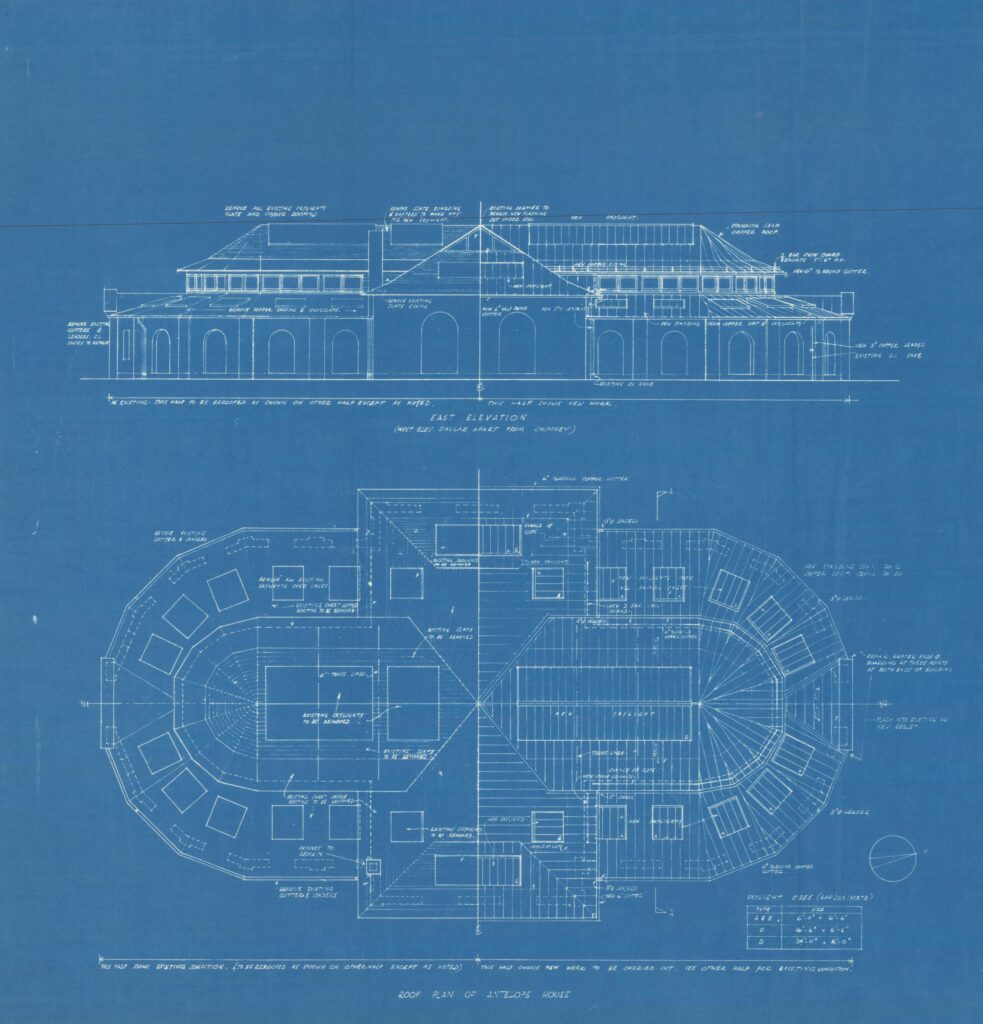
East Elevation and roof plan of Antelope House from blueprint.
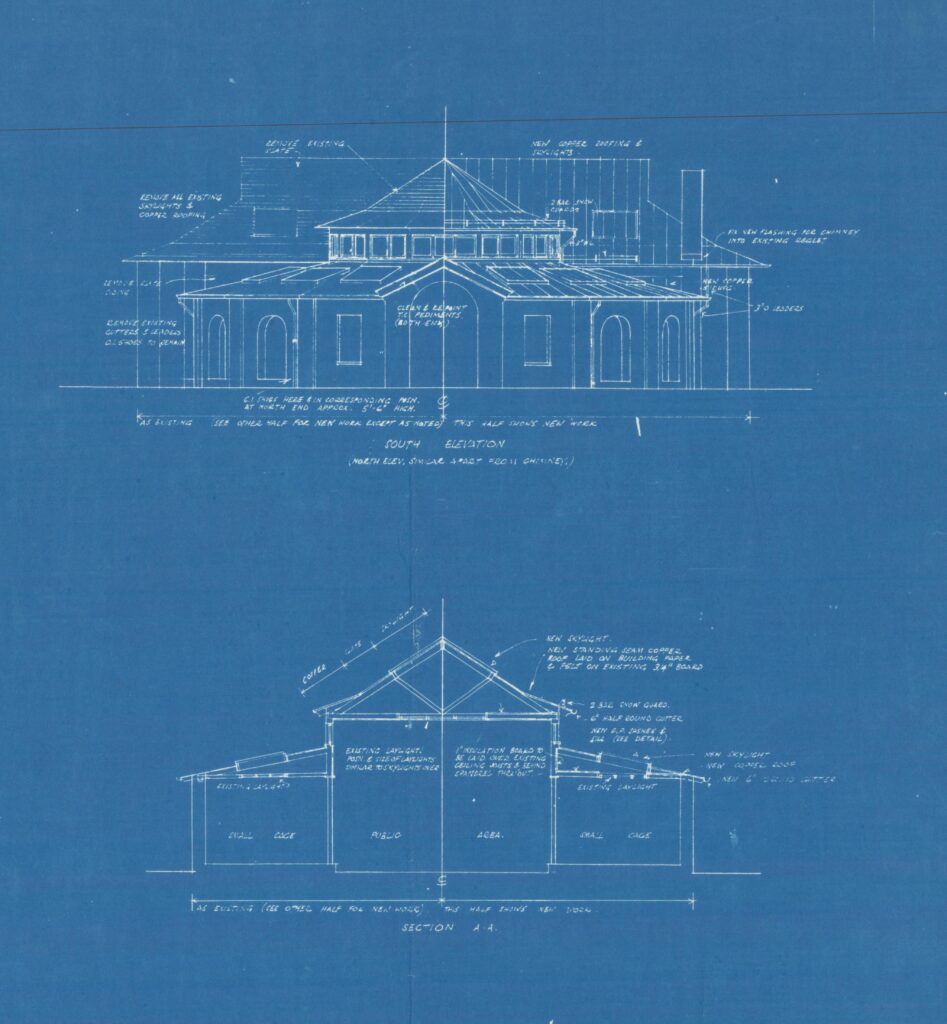
We have lots of plans: architectural drawings, ranging from entire Bronx Zoo buildings to exhibition doors and railings to Bronx Park walkways, have been stored with our Zoos & Aquarium Operations department for decades. One example is this 1920s blueprint to improve the roof of @BronxZoo’s Antelope House, a building that was demolished in the 1980s in preparation for the Carter Giraffe House.
South Elevation and cross-section of Antelope House from blueprint.
Now, thanks to a Conservation/Preservation Discretionary Grant from @nyslibrary, the WCS Library & Archives will soon embark on an effort to inventory, assess, and rehouse thousands of drawings. We’re excited to share more on our plans for these plans soon!
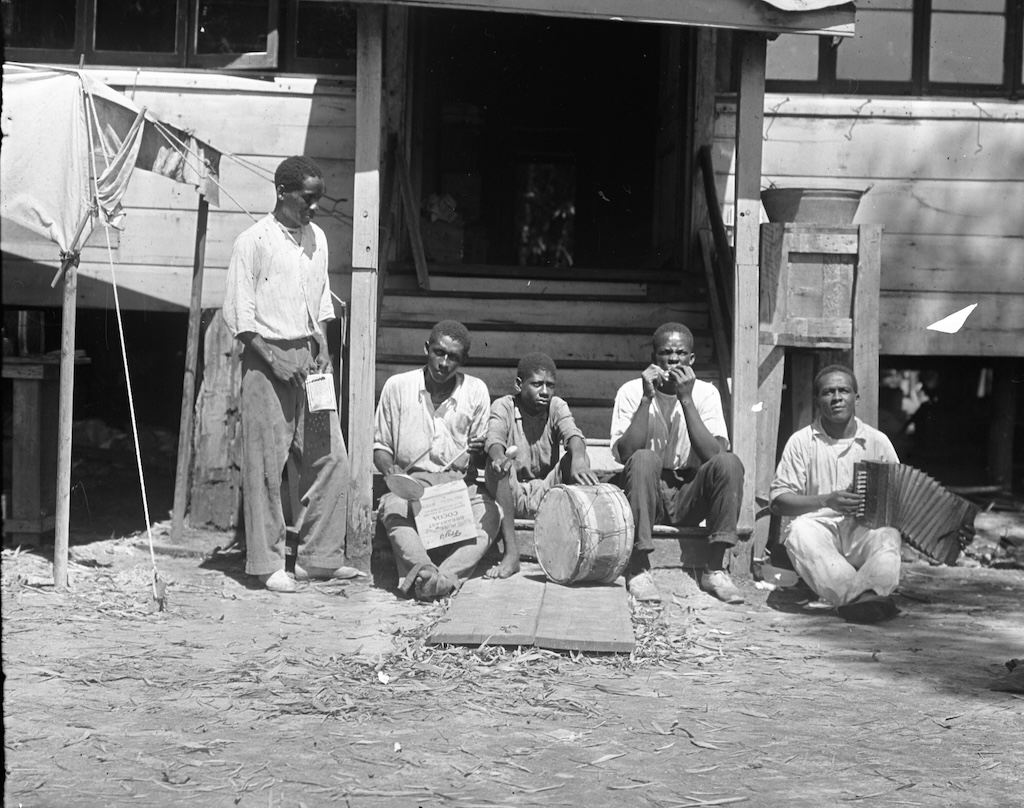
“The Kartabo Band,” Kartabo, British Guiana, 1924. WCS Archives Collection 5014-01-2800g.
As an Archives Technician for the WCS’s Library and Archives at the Bronx Zoo, much of my work over the past six months has involved digitizing 1,000 photographic negatives from the Department of Tropical Research’s (DTR) expeditions in British Guiana (now Guyana), Venezuela, Ecuador, and Haiti. In addition to digitizing, this work included cleaning, rehousing, and creating metadata for the collection. Many of the negatives document the team’s research in tropical terrestrial and marine environments, as well as scenes from the crew’s daily lives.
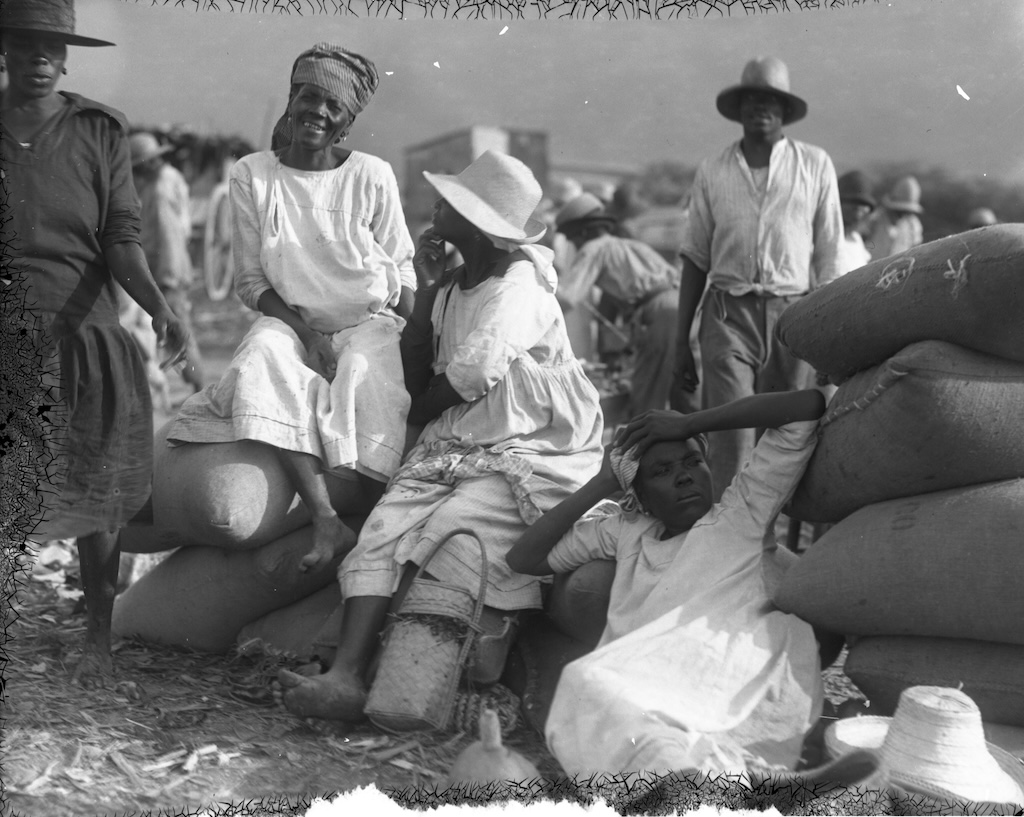
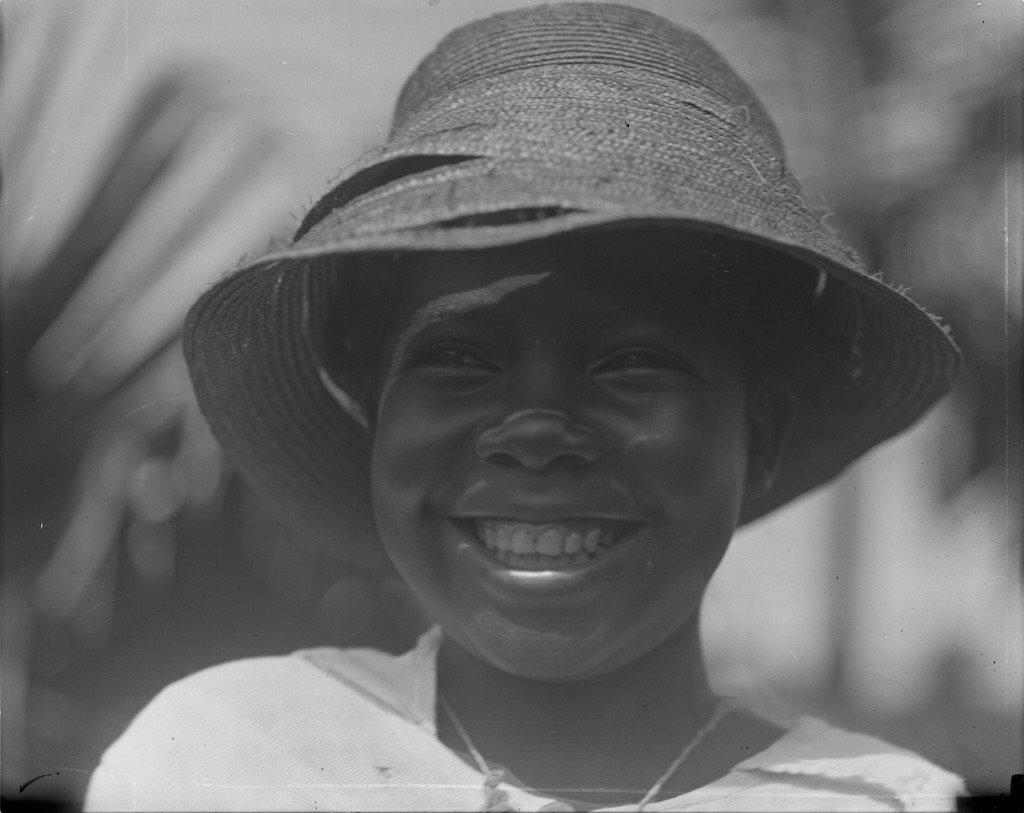
However, within a collection focused on non-human animals of the Caribbean and South America, I found myself most drawn to photographs of local people. Many appear without names, sometimes identified only by occupation or activity, and at times described using language that today would be recognized as a slur.
Images of humans other than the DTR crew make up approximately 5% of the currently digitized negatives (50 images). Only 1.4% (14 negatives) depict named individuals, all photographed during the DTR’s time in Guyana. Images of unnamed people are regionally split between Guyana (12 negatives) and Haiti (24 negatives).
This namelessness struck a chord with me as the child of Guyanese immigrants, whose extended family spans several Caribbean nations. While reviewing the negatives, there were moments when I recognized familiar features—faces that reminded me of my family or of people I had encountered during my travels to Guyana over the years.
“Maurie,” Kalacoon, British Guiana, July 1916. WCS Archives Collection 5014-01-0097Ag.
Wanting to understand more about these individuals and their relationship with William Beebe, I turned to his writing, hoping it might restore a measure of their humanity. Beebe was a prolific author, publishing extensively about his expeditions, particularly in Guyana, where he spent considerable time at the Kalacoon and Kartabo Laboratories. Two of his best-known works, Jungle Peace (1918) and Edge of the Jungle(1921), chronicle these experiences, with Jungle Peace notably featuring a foreword by Theodore Roosevelt.
In Jungle Peace, Beebe’s descriptions of local people range from condescending to overtly racist, at times reflecting white supremacist ideologies common in his era. He repeatedly refers to Indigenous and local people as “savages,” including in an anecdote describing a woman in New Amsterdam:
“I watched with fascination a coolie woman bearing a great bundle of loosely bound fagots [sticks]… It surpassed anything I had ever seen among savages—the hand-like mobility of that coolie woman’s toes” (Jungle Peace, 111).
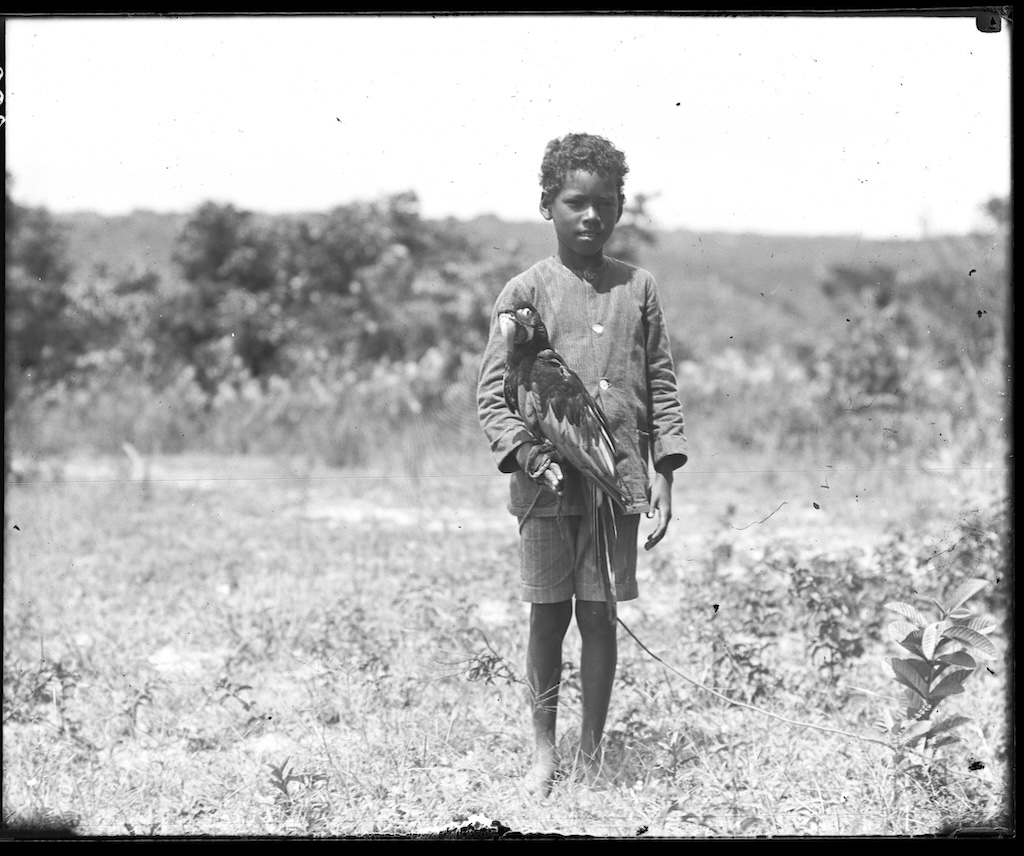
Beebe frequently uses derogatory racialized language, referring to individuals by terms tied to ethnicity or social status. The word “coolie,” for example, was historically used to describe low-wage indentured laborers, often of Indian or Chinese descent; today, it carries deeply derogatory connotations and is considered a racial slur in many countries. His writing also reflects eugenic thought, as when he claims to distinguish “racial types” in British Guiana and suggests that race-mixing occurs “at the expense of the purity of facial lineament of race” (Jungle Peace, 115).
Image originally titled “Coolie boy and macaw,” British Guiana, July 5, 1916. WCS Archives Collection 5014-01-0080Ag.
When describing former Dutch sugar plantations, Beebe’s tone shifts toward nostalgia for the colonial past. He evokes a time “when plantations were like small kingdoms,” populated by enslaved laborers and filled with luxury goods (Jungle Peace, 70–71). He contrasts this with the present, lamenting that “the wattled huts of the negros had outlasted the great manor-houses” (71).
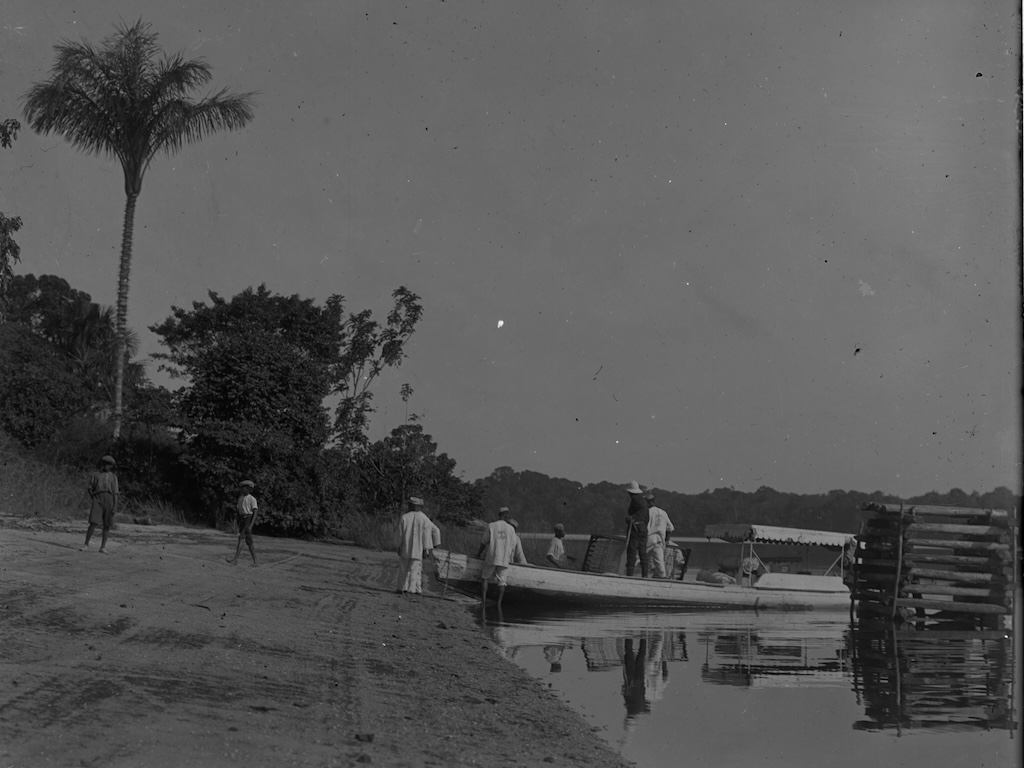
Image originally titled “Convicts carrying supplies from Kartabo,” British Guiana, November 5, 1921. WCS Archives 5014-01-1497g.
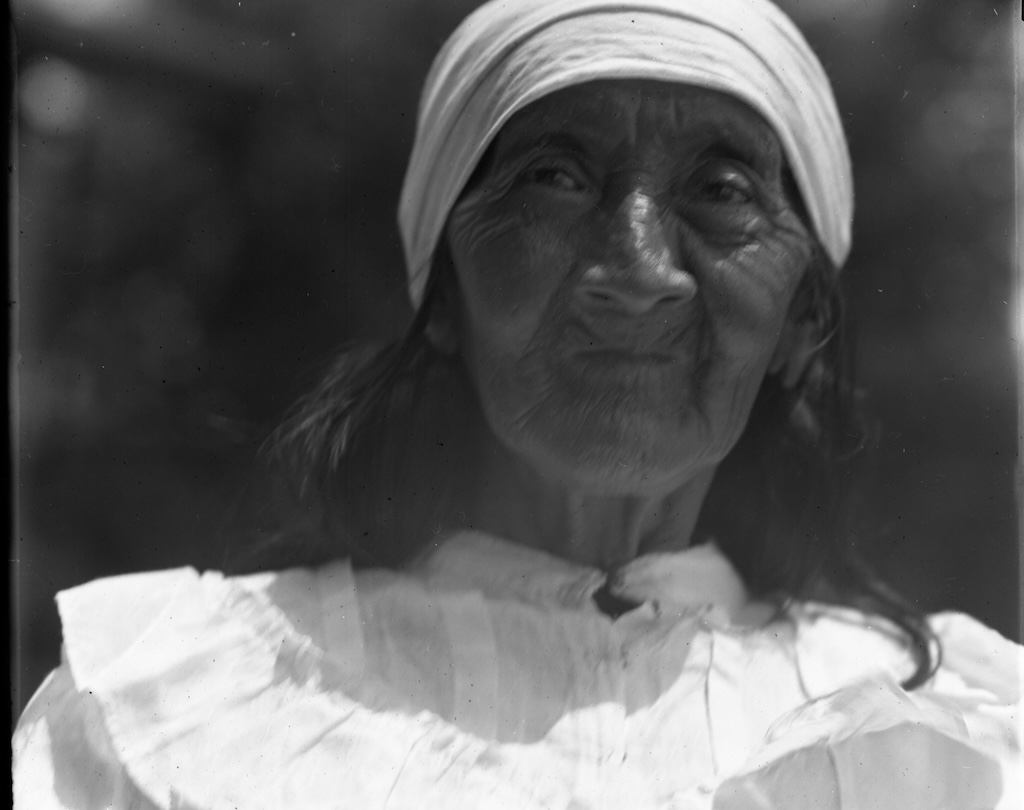
Despite this, Beebe occasionally records moments of apparent genuine connection. He writes warmly of “Grandmother,” an elderly Akawai woman he calls “a good friend,” with whom he shared long conversations despite her not speaking English (Edge of the Jungle, 116). He refers to the people who assisted him as servants, though he shows favoritism toward Sam Christopher, Degas, and Jeremiah (also called Nupee) during his time in British Guiana.
“Akawai Indian, Grandmother of Degas,” Kartabo, British Guiana, May 21, 1922. WCS Archives Collection 5014-01-1830g.
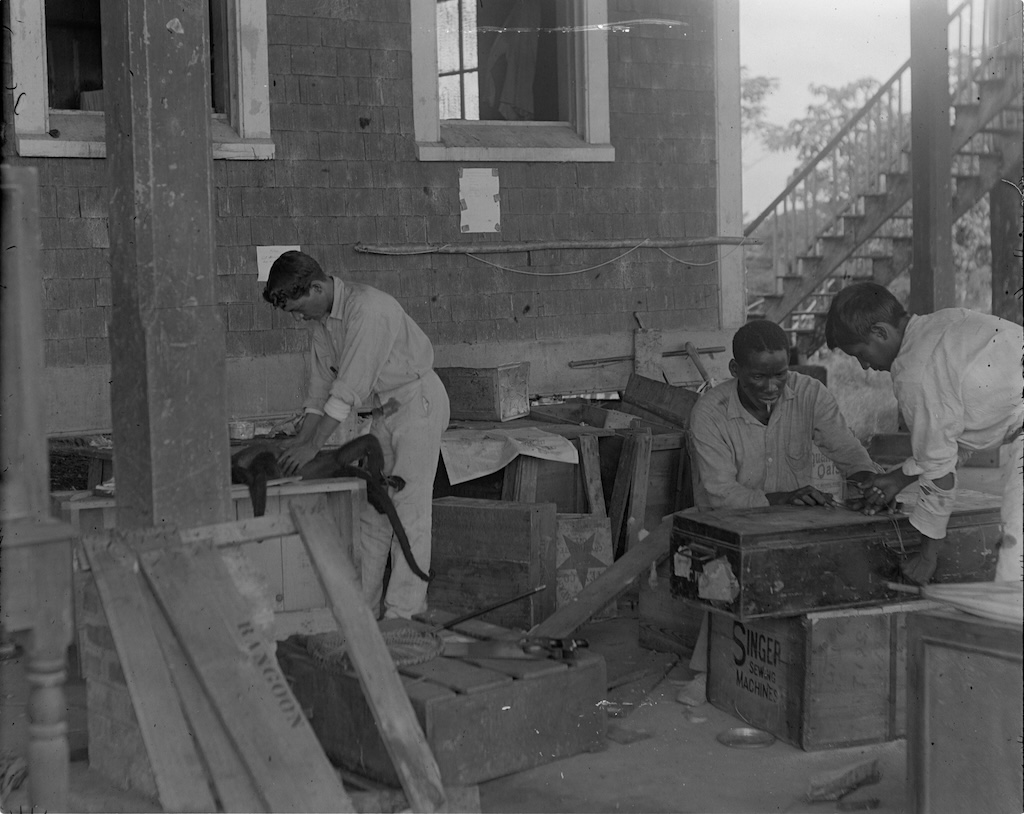
Beebe calls Sam “his boy” in his works, suggesting a close—though deeply paternalistic—relationship (Exploratory Works, 68). Through the writer, we learn fragments of Sam’s life: that he had once worked as a warden at a Georgetown jail (Jungle Peace, 140), and a humorous anecdote in which Sam loses his shoes in Kalacoon, only to find them days later at an Akawai wedding, worn by the groom (166–169).
“Sam [seated], Augustin, and [Defreitas?] working at Kalacoon,” British Guiana, July 8, 1916. WCS Archives Collection 5014-01-0090g.
Degas, Grandmother’s grandson, is portrayed as indulgent and a little ineffectual, described as eating from Beebe’s rations or accepting cigarettes while failing to identify a plant (Edge of the Jungle, 117–119).
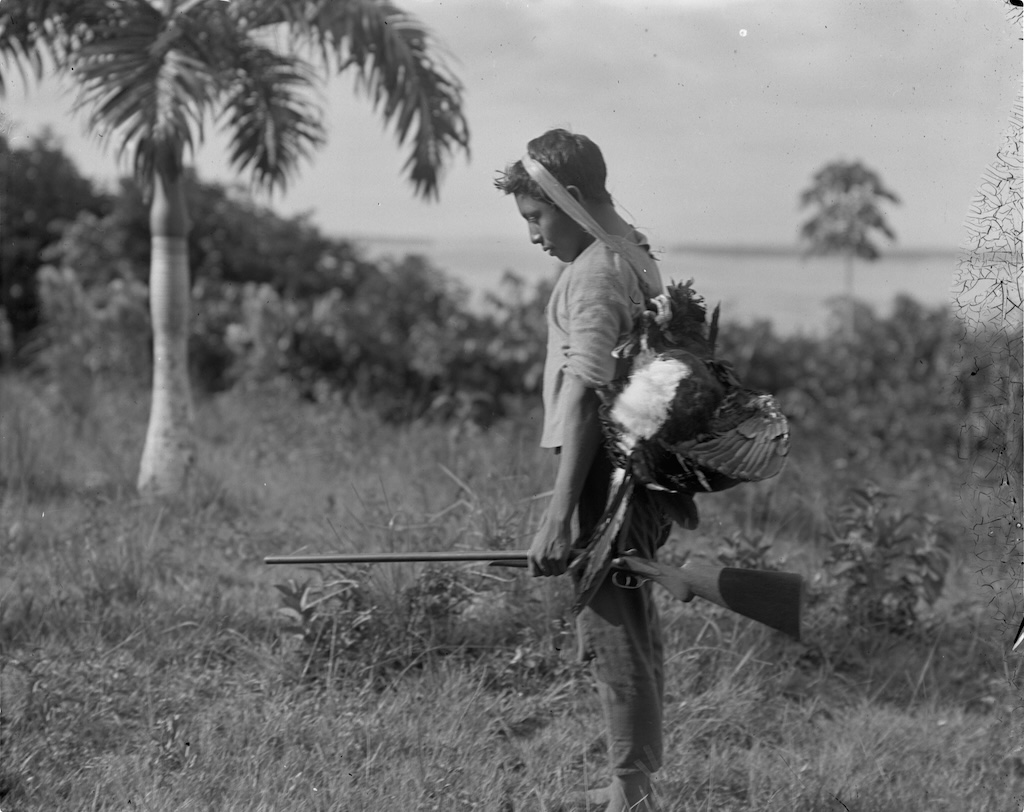
Jeremiah, an Akawai hunter, is described as “an exceptional, faithful servant first and then a friend” (Jungle Peace, 266). He is the only one of the three mentioned in both books; in Edge of the Jungle, Beebe notes his death and reflects that afterward “the jungle to the south seemed to call less strongly” (5).
“Akawai Indian, Jeremiah with game,” Kalacoon, British Guiana, 1916. WCS Archives Collection 5014-01-1080Cg.
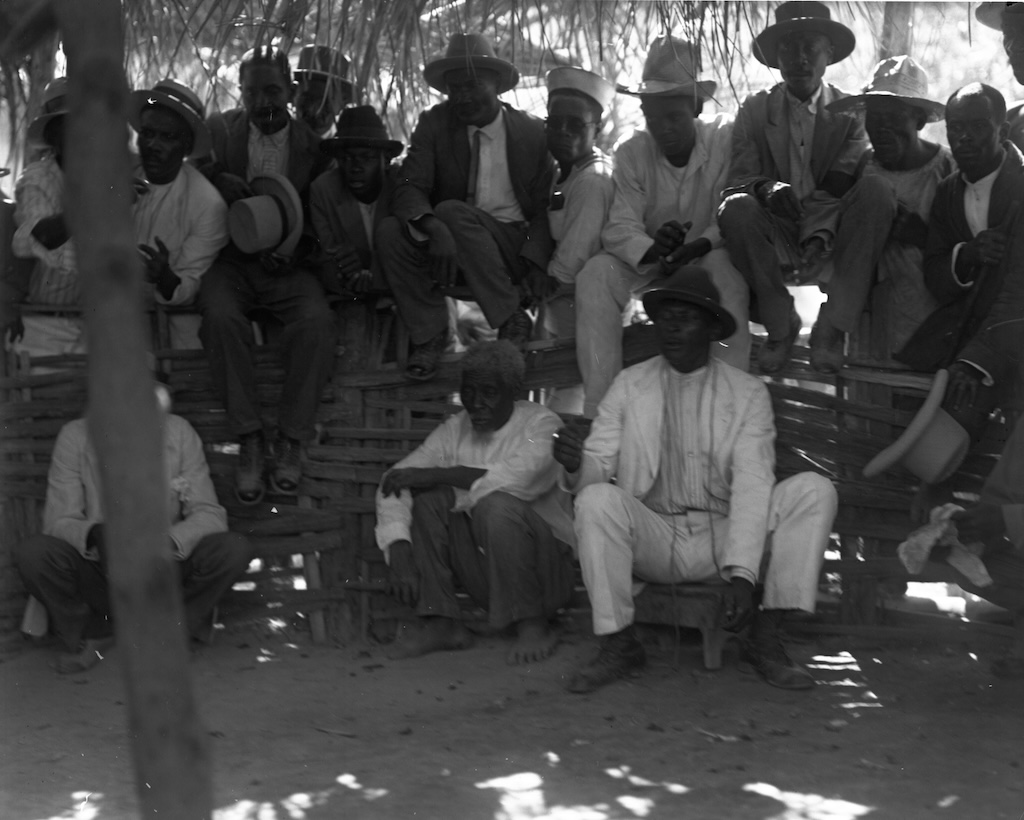
While processing the photographs, I also noticed a striking shift in how local people are identified in later expeditions, particularly in Haiti (1927). Here, individuals are no longer given names or honorifics like “Grandmother,” but are simply labeled “Native.” This contrasts sharply with the more specific identifications of Akawai people in Guyana. The photographic compositions and envelope descriptions render these individuals more like specimens—akin to fish or birds—than like people. These observations raise questions about the nature of the relationships between Beebe, the DTR, and local communities in each country.
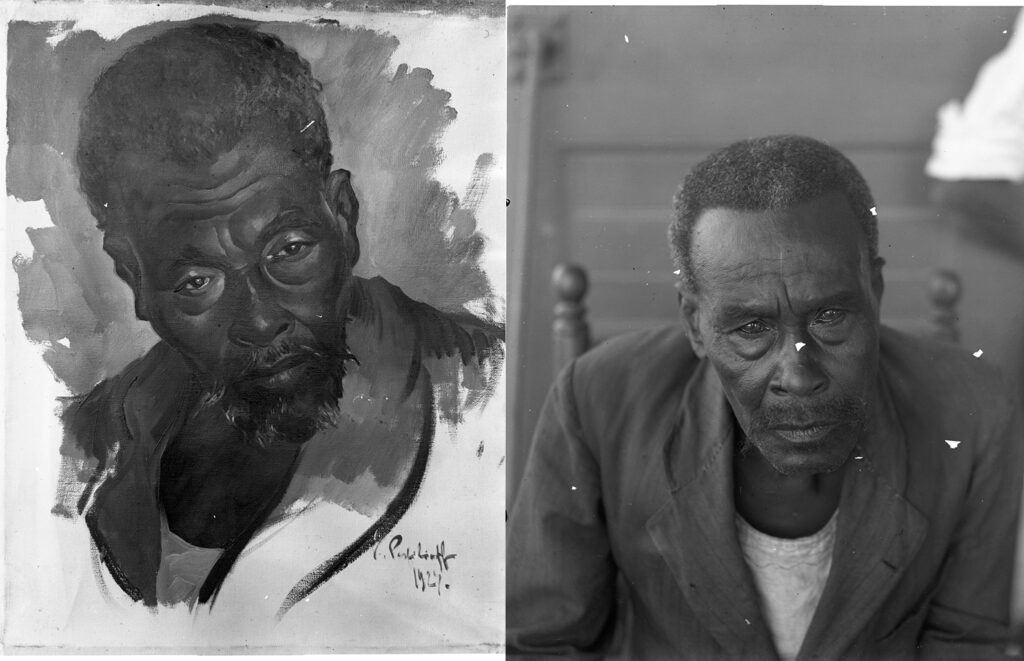
One explanation may lie in differing research priorities. In Guyana, the DTR relied heavily on local knowledge and labor to access terrestrial environments, whereas in Haiti, its focus shifted toward marine life. While this may partially account for the change in representation, it does not fully answer the most persistent question I had while reviewing the Haiti slides: why are there so many portraits?
“Copy of [Artist’s Name: Pertfeliel?] Head,” and “Boat of Native Men,” Port-au-Prince, Haiti, 1927. WCS Archives Collection 5014-03-3789g and 5014-03-3801g.
It would be easy to conclude that the erasure of names reflects a calculated decision in institutional priorities. However, the presence of photographs, documenting drawings, and their apparent reference images suggest a more complicated story. Someone invested time and skill into carefully rendering these individuals’ likenesses yet did not extend the same care to record their names. The artist’s signature remains difficult to decipher and will require further evaluation by a subject-matter expert. [Update: Since this blog post was originally published, we have identified the artist. He is Vladimir Perfilieff. According to this November 27, 1927 New York Times article, Perfilieff joined the DTR in Haiti to create portraits of “native types.”]
For now, this is where the story pauses. Still, I am hopeful that by disseminating these images, this project may continue beyond my own work. My greatest desire is that someone might recognize a family member, ancestor, or community member and help restore their name. A name carries identity, relationships, and history. By digitizing these photographs, I hope to have helped make naming—and reclaiming—these lives more possible.
The WCS Archives will be making all the images that Sabrina digitized from our Department of Tropical Research glass negative collection available online by May 2026. In the meantime, we’ll be sharing another post from Sabrina about the collection in April 2026.
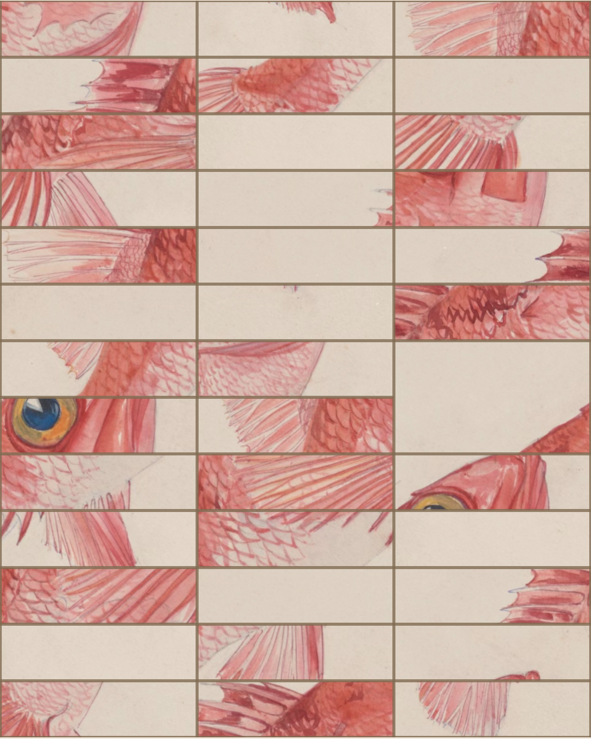
Scrambled tiles of artwork created by the Department of Tropical Research at Hudson Canyon.
Like other treasures in the WCS Archives, our scientific illustrations come with a very special story. In 1925, the WCS Department of Tropical Research—a remarkable group of women and men, including scientists and artists—set sail on the Arcturus Expedition. After months of groundbreaking research in the Galápagos, they spent four days exploring the vast and mysterious Hudson Canyon before returning home to New York City.
Just 100 miles southeast of the city—“thirty leagues from Broadway,” as DTR leader William Beebe later described it—the Hudson Canyon is one of the world’s largest submarine canyons and an important habitat for hundreds of wildlife species. In 1925, the expedition team was captivated by its beauty, strangeness, and diversity, documenting their discoveries in field notes and stunning illustrations now held in the WCS Archives.
One hundred years later, we’re proud to share these illustrations with a new audience. Players of the award-winning cozy puzzle game, The Art of Fauna, will now be able to learn about different species that live in the Hudson Canyon by solving puzzles made from six DTR illustrations in the WCS Archives. Alongside information about animals like the lined seahorse, man of war fish, and others, players can learn about the Hudson Canyon and WCS’ work in nominating and now advocating for its designation as a National Marine Sanctuary. This collaboration between the WCS Archives and The Art of Fauna app celebrates the history of this wondrous and vital ecosystem that WCS and partners are working to protect today.
“Without documents; no history. Without history; no memory.”
– Mary Ritter Beard (Historian, archivist, author and member of the Society of Women Geographers, quoted by Jayne Zanglein in The Girl Explorers [2021], 165.)
As the Project Assistant for the WCS Library and Archives’ Recording at Risk project, funded by the Council of Library and Information Resources (CLIR), one of the most rewarding experiences of digitizing the Department of Tropical Research Film Collection was unearthing films made by carcinologist Jocelyn Crane and ichthyologist Gloria Hollister. The Department of Tropical Research (DTR) was rare in employing both men and women field scientists in the 1920s through the 1960s. In addition to being excluded from conducting research in laboratories, women scientists were thought by some to be too socially distracting to travel and work alongside men abroad.
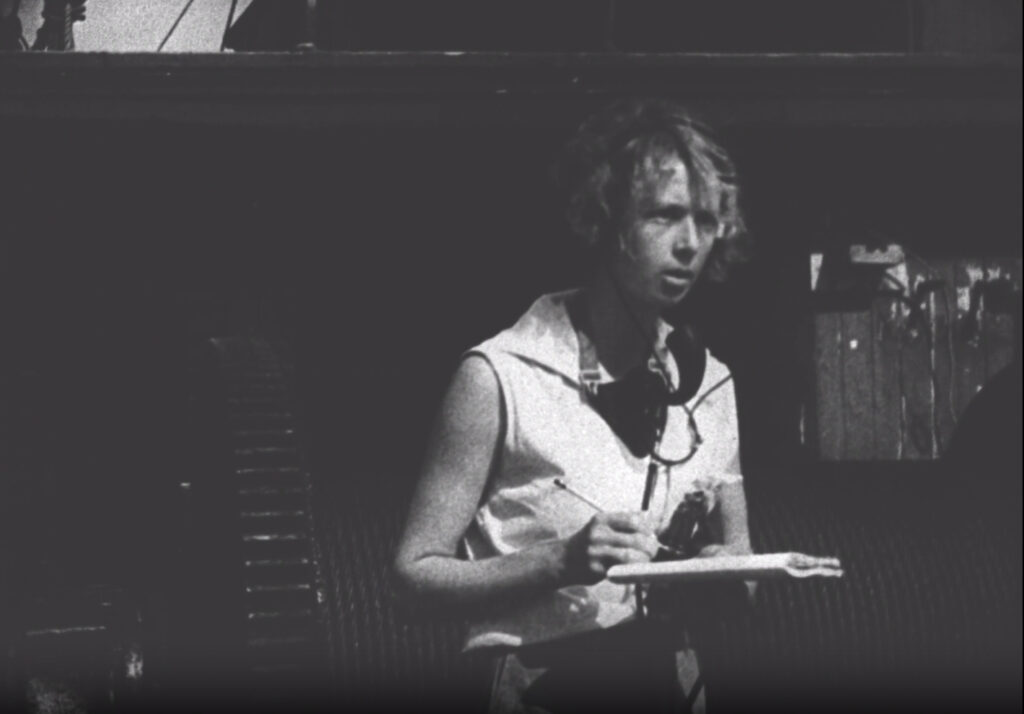
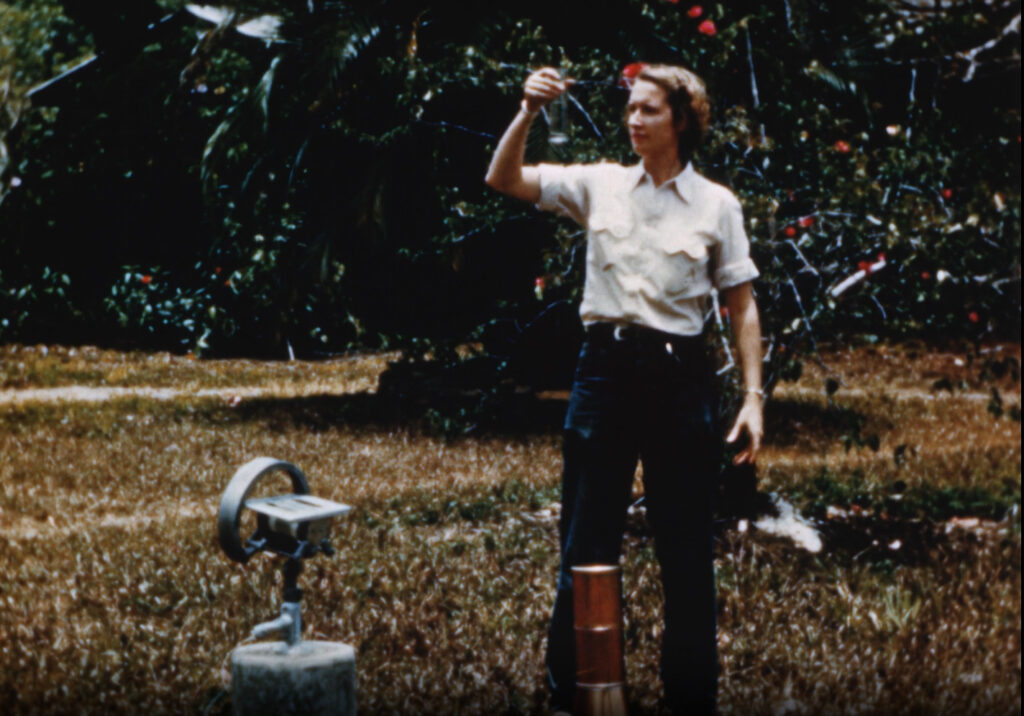
The above reel is the earliest footage WCS has of Gloria Hollister, who joined the DTR in 1929 as a marine biologist specializing in the study of fish. During her time in Bermuda Hollister developed a new technique for preparing fish specimens in which the skin and internal organs of the fish were made transparent, allowing the skeletons of fish to be visible for study without dissection. The first part of the reel shows her communicating through phone wire with DTR Director William Beebe during his deep-sea dives in the Bathysphere. In the 1930s, Hollister made several historic dives in the Bathysphere, reaching a depth of 1,208 feet in 1934. She held this record for the farthest underwater descent made by a woman for thirty years. While no footage of those descents appears to exist, this reel includes clips of Hollister walking underwater with a diving helmet and catching shallow water fish specimens.
After returning from her expeditions to Bermuda, Hollister would tour the United States on the lecture circuit, presenting her work at colleges, libraries, and women’s professional organizations. Her lectures were advertised as illustrating her deep-sea research work with colored lantern slides and films, shot with William Beebe in Bermuda. They could be edited in different versions—for a popular audience, a children’s audience, or a scientific one. Even after the advent of sound, these films were shown silently.
One of the distinguishing characteristics of the DTR Film Collection is its iterative nature. Its reels include different lecture versions; unlike Hollywood films, many of the DTR films are essentially variations on a theme, designed to be combined and recombined to suit various contexts.
Another valuable contribution of this collection is its emphasis on the daily working life of scientists. The films make a point of capturing how wildlife and natural history were being studied in the wild rather than through the examination of dead specimens. Beyond their potential impact on the scientific community of the day, the films were also posed to increase awareness about the practices of observation, exploration, and stewardship that wildlife research in the field enables.
According to Jayne Zanglein’s The Girl Explorers (2021), Hollister had met William Beebe when she was a college student and had seen his film “A Naturalist in the Guiana Jungle” as part of his 1923 lecture documenting the DTR’s field studies at “Kartabo” near the Mazaruni River in Guyana (then called British Guiana). Hollister was immediately enraptured by the glimpses these films provided into the life of researchers in tropical ecosystems. The impact that Beebe’s film had on Hollister’s own trajectory provides us with valuable insight into just how important the DTR films were in inspiring the imaginations of new generations of natural scientists.
Although the WCS Archives collection does not include “A Naturalist in the Guiana Jungle,” the film below contains footage from the DTR’s 1920s expeditions to Guyana.
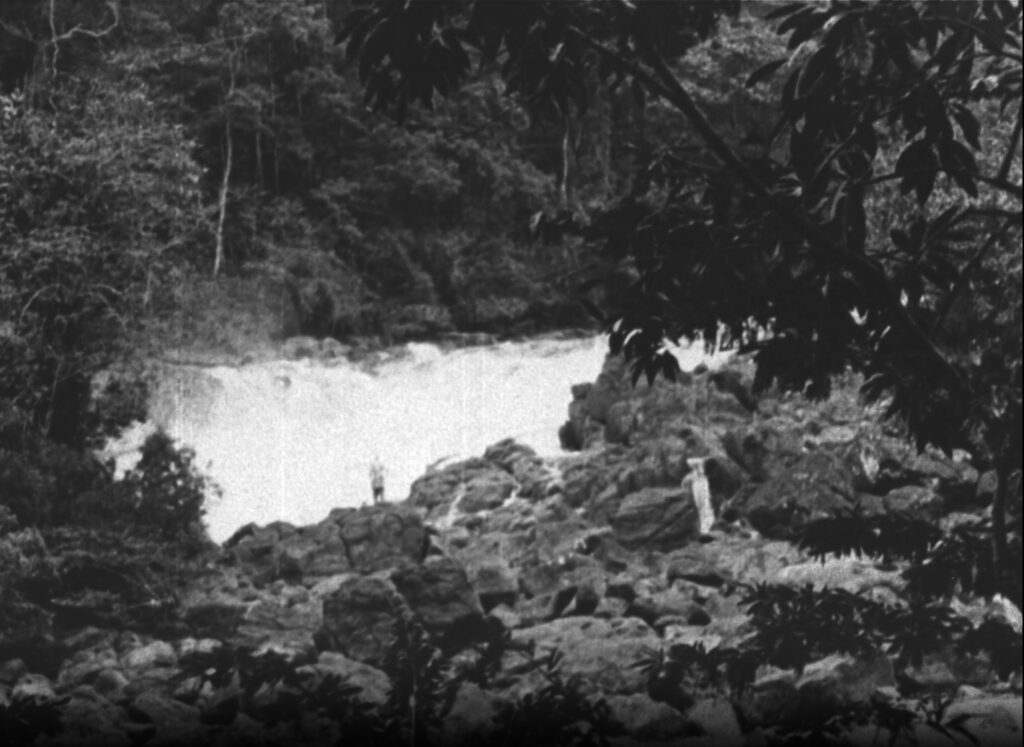
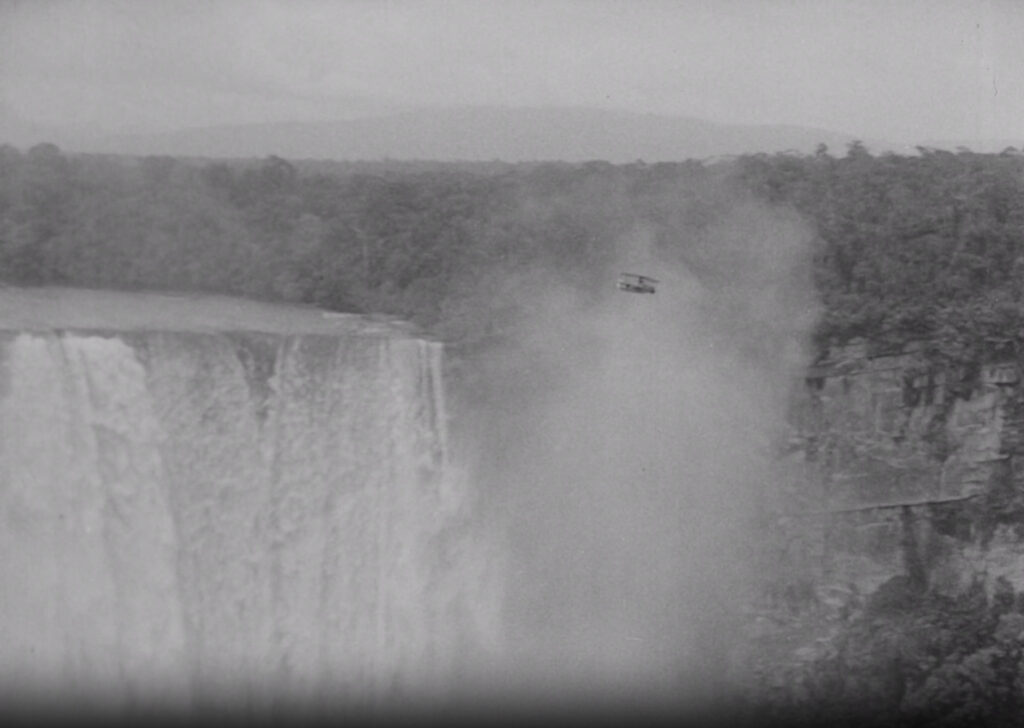
In 1936, Gloria Hollister came full circle and made history by leading her own DTR expedition to Trinidad, Barbados, and the interior of Guyana. Taking a cue from her mentor William Beebe, Hollister brought the photographer Arthur Menken and the artist Ruth Walker Brooks to document the expedition. The WCS Archives includes films from this expedition that contain the field observations of the guacharo or oil-bird of Trinidad, the peculiar methods utilized in capturing flying fish, and the early life of the hoatzin. During part of the expedition Hollister and Menken were flown by Arthur Williams, an airplane pilot, and Harry Wendt, co-pilot, over Kaieteur Falls and Plateau. In the reel below is footage that was taken both from the ground and from those flights. During these flights, Hollister and Menken recorded 43 waterfalls that were new to Western records.
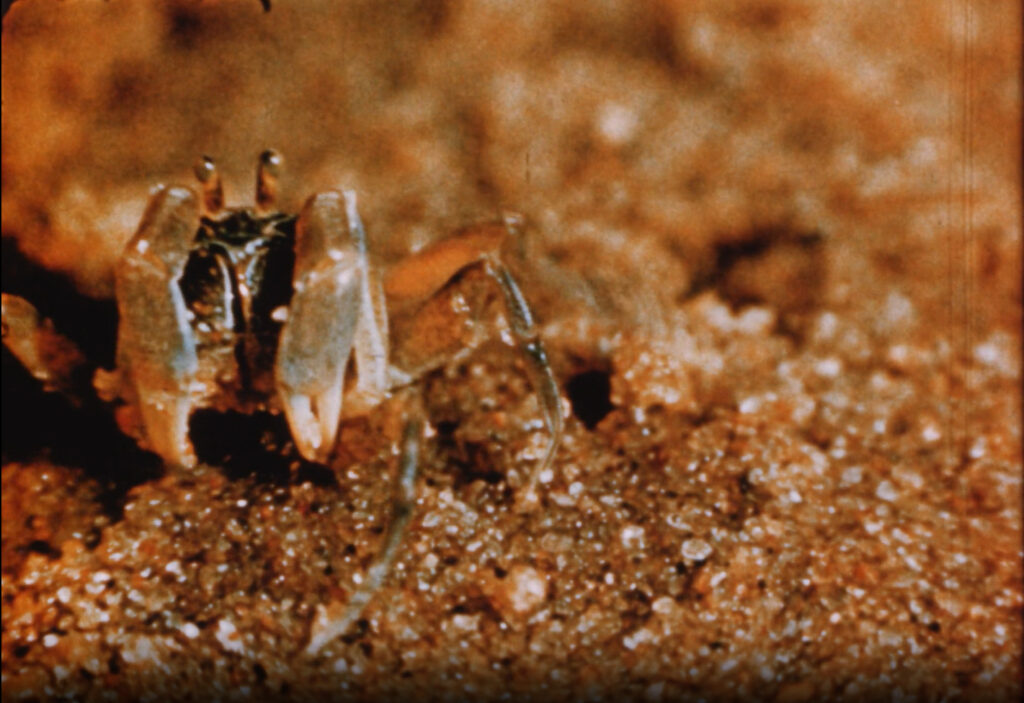
Jocelyn Crane joined the DTR staff in 1930, and for over 40 years she worked as a research zoologist alongside William Beebe. In 1952 she became the DTR’s assistant director, and after Beebe’s death in 1962 became the director. An expert on fiddler crabs, her fieldwork focused on studying the social behavior and evolution of crabs. For the majority of DTR films shot in the1940s through the 1960s Crane is credited as being behind the camera, filming wildlife in Venezuela, Bermuda, and Trinidad. The film below, “Biologist in the Tropics” (1954), skillfully illustrates the DTR’s approach to studying the behavior of tropical animals in the field.
In 1955, Jocelyn Crane was awarded a five-year grant from the National Science Foundation to further develop her body of research on crabs all over the world. Below is a travelogue-inspired film Crane made on her trip to Malaysia: “A Preface about William Beebe, and The Curious Crabs of Singapore” (1955). Narrated by Jocelyn Crane, the film documents her studies on 32 species of Ocypodid crabs. Her descriptions of various crabs, with focus on courtship behaviors, feeding, sheltering, and fighting, is interspersed with footage of Singapore waterfront and its bustling culture of canals.
This post was written by Leopold Krist, Project Archivist for the WCS Archives project Preserving Conservation Science and History: Digitizing the Department of Tropical Research Films. This project was supported by a Recordings at Risk grant from the Council on Library and Information Resources (CLIR). The grant program is made possible by funding from the Mellon Foundation.
The Wildlife Conservation Society (WCS) Library and Archives is excited to publicly unveil its Department of Tropical Research Film Collection. Through a program made possible by funding from the Mellon Foundation, WCS was awarded a Recordings at Risk grant from the Council on Library and Information Resources (CLIR) to digitize and make publicly available these films, created between the 1920s and 1960s.
The films in this collection are rare examples of the early integration between motion pictures and scientific practices. What makes the films of the Department of Tropical Research (DTR) particularly special is rather than just using film as a tool for scientific research or documentation, they started using the medium to generate public interest in their work by a mass audience.
Led by the naturalist William Beebe, the DTR conducted over four dozen expeditions across tropical terrestrial and marine locales. The staff of the DTR were among the first Western scientists to study the interconnectedness of tropical wildlife and their habitats through close, first-hand observations. In addition to field scientists, the staff of the DTR included writers, artists, and filmmakers who in addition to conducting scientific research were responsible for communicating the details of their fieldwork to a mass audience. This form of communication was likely also essential to the DTR in raising funds to cover the high costs of their research.
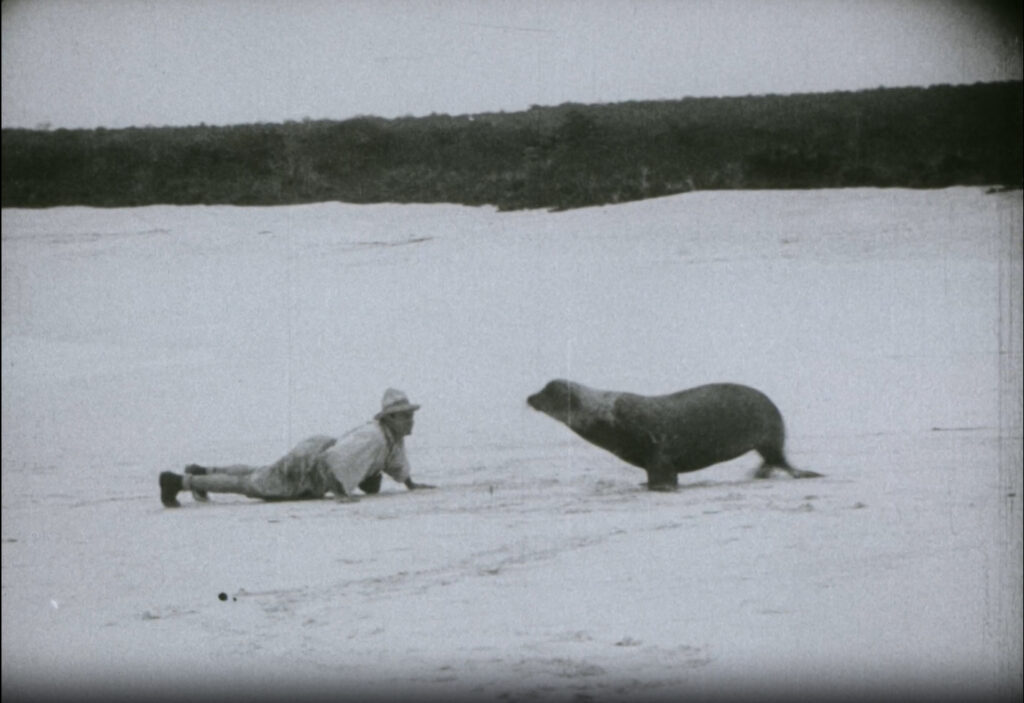
The film below is among the oldest DTR films we have in the WCS Archives. Created in 1923 and 1925, it contains clips from their two expeditions to the Galápagos Islands.
Shot by John Tee-Van and Ernest Schoedsack (the future co-director of King Kong [1933]) the material in the above reel was part of the stream of newsreels, books, and articles that the DTR released in both popular magazines and scientific journals. Less than a year after his first expedition to the Galápagos Islands, Beebe published the book Galapagos: World’s End(1924). The book spent a year on the bestsellers list, with its vivid color illustrations and black-and-white photographs of rare wildlife. It was an accessible account of the islands that reactivated interest in this area as the site that inspired Darwin’s natural history studies. Some of the DTR’s accompanying films of flightless cormorants, tortoises, iguanas and albatrosses were released as newsreels and introduced the Galápagos Islands to new audiences across the world.
In 1925 Beebe harnessed the public’s interest in his work and funded a six-month return expedition to the Galápagos Islands aboard the steam yacht Arcturus.
Above are two films shot by Ernest Schoedsack from the Arcturus expedition. The first film is an example of a newsreel exhibited alongside silent feature films, and the second film was shown to audiences attending William Beebe’s in-person lectures. In 1926, less than a year after returning from his second expedition to the Galápagos Islands, Beebe published another best-selling account of his oceanographic expedition, The Arcturus Adventure. The combination of Beebe’s books and films, according to Galápagos Conservation Trust Ambassador Henry Nicholls, reactivated public interest and led to a rapid increase in tourism to the Galápagos Islands.
This post was written by Leopold Krist, Project Archivist for the WCS Archives project Preserving Conservation Science and History: Digitizing the Department of Tropical Research Films. This project was supported by a Recordings at Risk grant from the Council on Library and Information Resources (CLIR). The grant program is made possible by funding from the Mellon Foundation.
This post was written by Helen Vivas, who was the WCS Library and Archives’ Photo Collection Management Intern for Fall 2023. Helen is completing her Bachelor’s of Arts, in history and film studies, from CUNY Queens College.
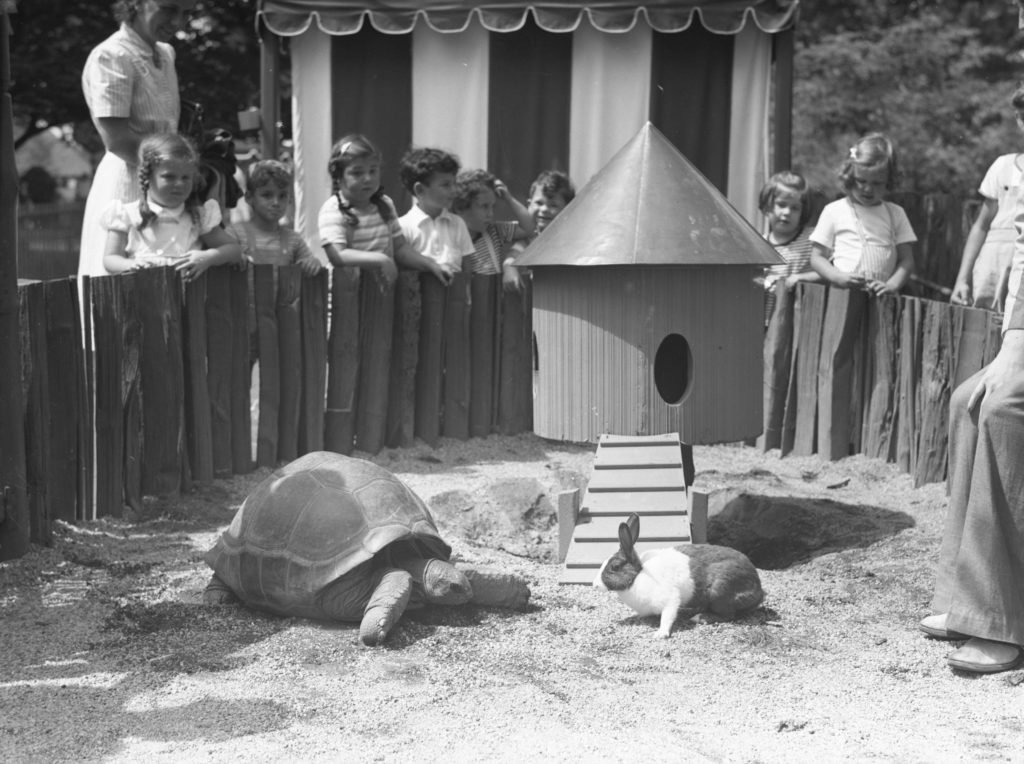
Children’s Zoo, July 31, 1941. WCS Photo Collection 18841.
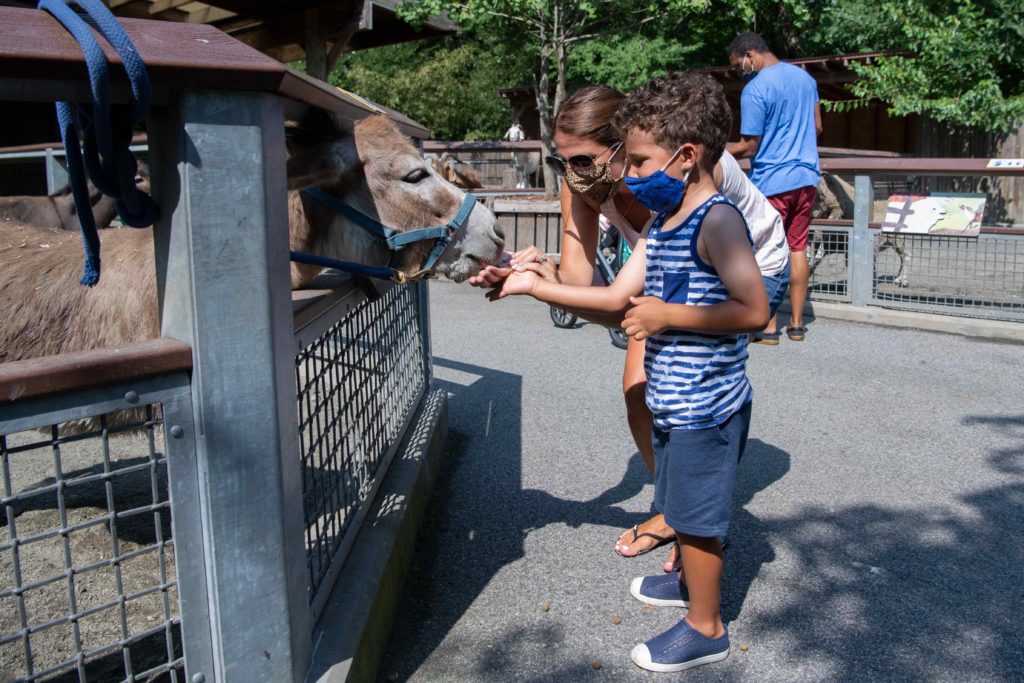
When the Children’s Zoo opened to the public in 1941, the War in Europe was already disrupting people’s lives in the U.S. As the country entered World War II at year’s end everyone had to make sacrifices, including education and recreation outside of schools. An area at the Bronx Zoo specifically for children created a friendly and welcoming environment during a time when many aspects in the lives of kids were changing. For a time, fuel rationing limited school trips. But according to the Annual Report of 1941: “wartime restrictions on classes visiting the Zoo were removed early in the season and classes began to come in considerable numbers — we undertook to give free guided tours to classes from New York City schools. In all, 113 school tours were scheduled — far more than we could take care of.” (29) Children needed public spaces for social and educational activity, a parallel seen during the Bronx Zoo’s 2020 reopening amid the coronavirus pandemic. The environment of the Bronx Zoo has always catered to curious onlookers learning from animal exhibits. These historic moments saw the zoo leaning into its role as a child-friendly educational resource.
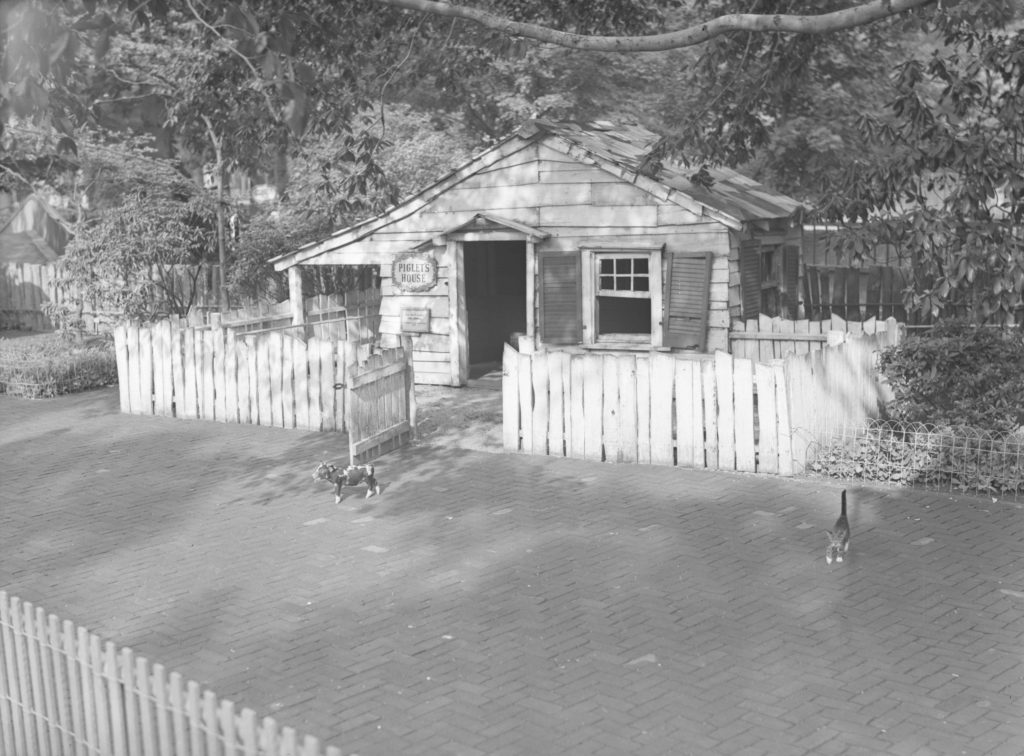
Children’s Zoo, July 31, 1941. WCS Photo Collection 18847.
Through my work as the intern at the WCS Library and Archives, I have come to understand how the Bronx Zoo recognizes public need and interest over much of the past 125 years. Although children today have information and technology at their fingertips, they still have a strong need for experiences in the real world. In a place like New York City where concrete and skyscrapers overtake our environment, for some the Bronx Zoo is the only place to interact with wildlife and different environments. A zoo is more than a place where animals live, it teaches empathy and appreciation for a world beyond our own. Those attributes can be especially helpful during confusing times.